1-800-309-2144

The gap between the manual and the job site is real — and it's costing you time
You've done everything right. You ordered the right unit, prepped the enclosure, followed the guide — and now you're standing on a job site where nothing lines up the way the spec sheet said it would. The rough opening is off. The wall assembly shifted. The tolerances in the guide assumed a perfect world that doesn't exist in residential or commercial construction. That's not a user error. That's a systemic problem with how most manufacturers write installation documentation — and trade professionals pay the price every single time. Most people assume the manual is the final word. It isn't. It's a starting point written in a controlled environment by engineers who weren't on your job site.
Why do manufacturer installation guides fail in the field?
Manufacturer guides are written to satisfy two things: liability protection and idealized lab conditions. They're not written by people who've watched a modular wall panel shift three-quarters of an inch after the HVAC rough-in, or who've had to accommodate a structural element that wasn't on the original plans.
The result is documentation that reads clean on paper and falls apart on site.
Here's what typically causes issues when you're working from a standard manufacturer guide:
Tolerance stacking isn't accounted for. A guide might call for a rough opening within ¼ inch. That works when one trade is involved. In real construction, you're dealing with framing tolerances, drywall tolerances, and finish tolerances — all stacking on top of each other. By the time the fireplace unit arrives, that ¼ inch allowance has already been consumed.
Airflow assumptions are theoretical. Most guides specify clearances around the unit without accounting for what's actually happening in the wall cavity. Cross drafts from HVAC, gaps in the enclosure, or adjacent mechanical runs can all disrupt the airflow environment the unit was designed for. This is especially critical for water vapor fireplaces, which require controlled airflow to perform correctly. We've seen the same installation mistakes repeatedly — dust exposure, poor enclosure sealing, and cross draft. The guide doesn't warn you about any of it.
Sequence of trades isn't addressed. A guide tells you where the unit goes. It doesn't tell you what happens when the electrician runs conduit through the enclosure space after you've already prepped it, or when the tile setter needs two extra inches that weren't in the original plan.
What stage of construction are you in right now — and why does it matter?
This is one of the first questions we ask every trade professional who comes to us with a fireplace project. Because the answer changes everything about how the installation should be planned.
New construction vs. retrofit — the install environment is different
In new construction, you have the opportunity to build the enclosure correctly from the start. That means accounting for the unit's actual dimensions — not the nominal dimensions listed in the spec sheet — and building in the clearances the unit actually needs for airflow, not the minimum clearances listed for liability purposes.
In a retrofit, you're working backward. The wall is already there. The question becomes: what does this specific enclosure allow, and which unit fits cleanly into that reality? We guide you through that assessment before you order anything.
Who is making the final specification decision — builder, designer, or client?
This matters because each stakeholder has a different definition of "it fits." The designer wants the visual result. The builder wants the installation to close out without a callback. The client wants it to work. Our job is to make sure the specification satisfies all three — and that starts with understanding the actual field conditions, not just the floor plan.
What's the intended use — visual feature or supplemental heat?
This question determines which product category makes sense and which installation approach reduces post-install service calls.
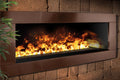
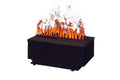
If the fireplace is primarily an architectural feature — a luxury focal point in a living room, a lobby, a model unit — the priority is client-facing visual impact. That shifts the conversation toward units with the most realistic flame effect, including water vapor options that deliver a real flame visual without combustion. Water vapor fireplaces deliver the most realistic flame effect available without combustion. However, they require proper enclosure preparation and airflow control to perform correctly. We provide guidance upfront to prevent those issues.
If the unit needs to function as supplemental heat in addition to serving as a visual element, the specification changes. The enclosure requirements change. The electrical requirements change. Getting this wrong at the spec stage is what causes the field headaches that show up three weeks after the client moves in.
The product is only 50% of success — the install environment is the other 50%.
Is there an existing enclosure, or are you building from scratch?
This is where most installation problems originate. We've worked on thousands of installs — most issues come from enclosure prep and airflow.
Building from scratch gives you control
When the enclosure is being built around the unit, you have the opportunity to spec the rough opening to the unit's actual field dimensions, not the nominal spec. You can build in the clearances that prevent heat buildup. You can plan the electrical rough-in before the framing closes. This is how you get a clean install, no venting, no gas, no framing complications — a drop-in ready solution that doesn't generate callbacks.
An existing enclosure requires honest assessment
When the enclosure already exists, the conversation starts with what's actually there. Send us the enclosure dimensions — not the plan dimensions, the actual field measurements. We'll tell you what fits, what doesn't, and what modifications, if any, are needed before the unit arrives. If you send over your plans or project details, we can recommend the correct unit and installation approach. We can spec this with you to ensure a smooth install.
This is how we prevent the situation where a unit arrives on site and the rough opening is wrong. That scenario is avoidable — but only if the spec happens before delivery, not after.
Spec with confidence — even when the field doesn't cooperate
The gap between what a manufacturer guide says and what actually works on site is real. It's not your fault, and it's not going away. What changes is whether you have a credible source helping you navigate it before it becomes a problem — or after.
At Electric Fireplaces Depot, we work directly with manufacturers as a factory-direct authorized dealer. That means we have access to the technical detail that doesn't make it into the public-facing installation guide. We know which tolerances are true minimums and which ones have real-world margin. We know which enclosure conditions cause issues and how to address them before the unit ships. We'll spec this correctly so you don't have problems after install.
Trade professionals who work with us don't just get a product. They get a partner who's seen what goes wrong in the field and knows how to prevent it — from the first conversation through after-sale support.
Let's make sure you don't run into the common issues we see in the field. Reach out to the Electric Fireplaces Depot pro team directly at 800-309-2144 or email us at Pro@electricfireplacesdepot.com — tell us about the project, what stage of construction you're in, and we'll take it from there.
Checklist
-
Measure the actual rough opening on site — not the dimensions on the plan — before specifying any unit
-
Identify whether you're working with a new construction enclosure or an existing wall assembly before ordering
-
Confirm the airflow environment: check for cross drafts from HVAC, gaps in enclosure framing, and adjacent mechanical runs
-
If you're specifying a water vapor fireplace for a modular wall application, seal the enclosure and control the airflow environment before installation begins
-
As a general contractor or builder managing multiple units across a project, confirm electrical rough-in sequence with your electrician before enclosure framing closes
-
Contact Electric Fireplaces Depot with actual field measurements and project stage — not just the floor plan — so the right unit is specified before it ships
FAQ
Why don't manufacturer installation guides account for real job site conditions?
Most manufacturer guides are written to meet liability requirements and assume ideal lab conditions. They don't account for tolerance stacking across multiple trades, real-world airflow variation inside wall cavities, or how construction sequence affects the final enclosure. The result is documentation that's technically accurate but practically incomplete for field installation.
What's tolerance stacking and why does it matter for fireplace rough openings?
Tolerance stacking happens when small variances from framing, drywall, and finish work all accumulate in the same direction. A guide might call for a rough opening within ¼ inch, but by the time framing, drywall, and tile tolerances combine, that allowance is already gone before the unit arrives. Electric Fireplaces Depot recommends specifying from actual field measurements, not plan dimensions, to avoid this.
Do water vapor fireplaces require special enclosure preparation?
Yes. Water vapor fireplaces deliver the most realistic flame effect available without combustion, but they require a controlled airflow environment to perform correctly. Common installation mistakes include dust exposure during construction, poor enclosure sealing, and cross drafts from HVAC systems. Electric Fireplaces Depot provides step-by-step guidance on enclosure prep before the unit ships.
What information should I have ready before specifying an electric fireplace for a modular wall project?
The most useful information is the actual field dimensions of the rough opening or enclosure, whether this is a new construction or retrofit application, who is making the final specification decision, and whether the unit is intended as a visual feature, supplemental heat, or both. With that information, Electric Fireplaces Depot can recommend the correct unit and installation approach before anything is ordered.
Can electric fireplaces be used in multi-family or commercial modular wall applications?
Yes. Electric units are ideal for projects requiring simplicity, reliability, and zero venting. They integrate cleanly into most wall assemblies, require no gas line, and are safe for multi-family applications. They scale across multiple units and projects and have minimal service requirements, which reduces post-install service calls — a significant advantage for builders and developers managing multiple units across a development.
What causes the most callbacks on electric fireplace installations?
Based on thousands of installs, the most common issues come from enclosure prep not the unit itself. Specifically: openings that were sized from plan dimensions rather than actual field measurements. Addressing these before installation is how you get a clean install that doesn't generate callbacks.