1-800-309-2144

When you're managing multiple multifamily projects simultaneously, the math on product risk changes completely. A failure rate that's acceptable on a single custom home becomes catastrophic when it's replicated across 80, 120, or 200 units. Electric Fireplaces Depot works directly with builders at this scale, and the pattern is consistent: the professionals who protect their margins and their developer relationships are the ones who spec products that eliminate variables before those variables have a chance to compound. Here's what that actually looks like in practice.
What Makes a Fireplace Fail at Volume When It Worked in Testing?
This is the right question, and most builders don't ask it until they're already committed to a full project run.
Small-scale testing tends to happen in controlled conditions—a model unit, a show home, or a single building phase where install quality is unusually high. The crew is careful, the enclosure is prepped correctly, and the product performs. Then volume production begins, and conditions change. Different crews, faster timelines, tighter enclosures, inconsistent framing tolerances, and suddenly you're getting callbacks on unit 14 and you've already signed off on 180 more.
The variables that cause this divergence are almost always environmental, not product-related. But the product category you choose determines how sensitive your installation is to those variables.
Why Gas and Vented Systems Amplify Risk at Scale
Gas fireplaces introduce a set of dependencies that multiply across volume: gas line sizing, venting runs, combustion airflow, and local utility coordination. Each of those variables behaves differently unit to unit, floor to floor, and building to building. When something goes wrong at unit 40, diagnosing whether the issue is the product, the venting configuration, or the gas supply isn't quick, and it isn't inexpensive.
This is where the cost-conscious builder's margin disappears—not in the product cost, but in the diagnostic and remediation labor across a project that was already tight.
Why Do Electric Fireplaces Perform More Consistently Across Multifamily Installations?
Electric units are ideal for projects requiring simplicity, reliability, and zero venting. That's not a marketing position—it's an engineering reality that matters at scale.
Here's what gets eliminated when you spec electric across a multifamily project:
-
No venting required, which means no venting variation unit to unit
-
No gas line needed, which removes utility coordination and pressure variation as a failure point
-
No combustion, which means no maintenance cycle tied to combustion byproducts
-
Safe for multi-family applications, with no carbon monoxide risk and no fire code complexity around open combustion in shared-wall construction
Each of those removed variables is a removed failure mode. When you're replicating an installation 80 or 200 times, the product that has fewer ways to go wrong is the product that protects your margin.
What Does "Consistent Performance" Actually Look Like Across Units?
It means that unit 1 and unit 180 operate identically, because the installation environment is the only meaningful variable, and that environment is something your team can control and standardize.
Electric fireplaces integrate cleanly into most wall assemblies and require minimal maintenance. The installation is repeatable. Your crew learns it once, and that knowledge transfers directly to every subsequent unit. There's no specialized combustion technician required, no venting inspection per unit, no utility signoff delay.
The product is only 50% of success—the install environment is the other 50%. But with electric, the installation environment is something your team owns. With gas or venting systems, you're sharing that control with utility companies, inspectors, and combustion dynamics that vary by floor elevation and exterior exposure.
How Does a Factory-Direct Partner Reduce Volume Risk Before It Starts?
The risk of discovering a specification problem at unit 15 when you've committed to 200 more is real, and it's the kind of risk that ends developer relationships. Working with a factory-direct authorized dealer changes that risk profile.
Electric Fireplaces Depot works directly with manufacturers. That means the specs you receive are accurate, the product you order is the product that ships, and if a question arises mid-project, the answer comes from a source with direct manufacturer access—not a distributor interpreting a spec sheet.
Here's what that looks like practically for a multifamily builder:
Before specification: Tell us about the project—new build or retrofit? What stage of construction are you in right now? Who is making the final specification decision—builder, designer, or client? What's the intended use—visual feature or supplemental heat? Is there an existing enclosure or are you building from scratch? Based on your setup, we recommend the correct unit and installation approach before you've committed to anything.
During the project: If an installation question comes up at unit 40, you're not waiting for a distributor to relay a question to a manufacturer. You have direct access to the people who can answer it.
After delivery: Warranty support runs through the manufacturer directly, not through a third-party middleman. For a multifamily project, that matters. If a unit has an issue at month 14, you need that resolved without a chain of escalation that burns your time and your crew's time.
What About Pricing Across a Volume Project?
Factory-direct trade pricing scales with project size in a way that distributor pricing typically doesn't. Trade professionals working with Electric Fireplaces Depot on multifamily specifications get pro pricing that reflects the actual volume commitment—not a retail price with a nominal discount applied.
Predictable operating cost on the product side, combined with predictable install cost from a repeatable process, is how you protect margin on a tight multifamily project. The fireplace becomes a reliable line item rather than a risk variable.
What Should a Multifamily Builder Know Before Specifying at Scale?
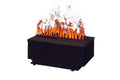
We've worked on thousands of installs—most issues come from enclosure prep and airflow, not from the product itself. For water vapor units, which deliver the most realistic flame effect available without combustion, proper enclosure preparation and airflow control are essential to consistent performance. We've seen the same installation mistakes repeatedly: dust exposure, poor enclosure sealing, and cross draft. We provide guidance upfront to prevent those issues, and we guide that process step-by-step across your project.
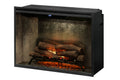
For standard electric units, the enclosure requirements are simpler, which makes them the right call for most multifamily applications where the goal is a clean architectural feature with builder-grade reliability and minimal service requirements after handover.
Make sure you don't run into the common issues we see in the field. If you send over your plans or project details, we can recommend the correct unit and installation approach before you're committed to a volume order.
Spec the Right Product Before Volume Exposes the Wrong One
The question isn't whether electric fireplaces work at scale—they do, consistently, across multifamily applications nationwide. The question is whether you're specifying the right unit for your enclosure type, your installation environment, and your project timeline, and whether you have a partner who can back that specification with direct manufacturer access, trade pricing, and real support when the project is live.
Electric Fireplaces Depot is built for exactly this kind of project. We're not a general retailer—we're a factory-direct authorized dealer with nationwide inventory, warehouse shipping, and a team that understands multifamily specifications at volume.
If you're in the planning stage, reach out before you commit. Call / Text us at 800-309-2144 or email us directly at Pro@electricfireplacesdepot.com. Tell us the project scope and where you are in the construction timeline—we'll spec this correctly so you don't have problems after install.
Checklist: Specifying Electric Fireplaces for Multifamily Volume Projects
-
Confirm enclosure dimensions are standardized across all units before ordering—variation in rough-in depth is the most common cause of inconsistent installs at volume.
-
Request trade pricing upfront and confirm it applies to the full project quantity, not just the initial order.
-
Ask your supplier for written installation guidelines specific to your unit model and enclosure type before your crew starts unit one.
-
If you're a general contractor managing multifamily fireplace specs, verify that the product is listed as safe for multi-family applications and confirm code compliance for your jurisdiction before specification.
-
Test the installation process on two or three units before standardizing the approach across the full project—document what your crew learns so it transfers reliably.
-
Confirm warranty support runs factory-direct, not through a distributor, so mid-project issues can be resolved without escalation delays.
FAQ
Can electric fireplaces really hold up across 100+ units in a multifamily project?
Yes, and this is where electric has a structural advantage over gas or vented systems. Because there's no venting, no gas line, and no combustion involved, the installation is repeatable and the performance variables are limited to enclosure prep and electrical connection—both of which your crew can standardize. Builders who've scaled electric fireplaces across large multifamily projects consistently report fewer post-handover service calls than comparable gas installations.
What's the biggest mistake builders make when scaling fireplace installs across multiple units?
The most common issue isn't the product—it's the enclosure. Inconsistent rough-in depth, poor airflow management, and dust exposure during construction are the three problems Electric Fireplaces Depot sees repeatedly in the field. Getting the installation guidelines before unit one goes in, and standardizing that process across the crew, is what separates a smooth volume project from one that generates callbacks.
How does factory-direct pricing work for a multifamily builder ordering at volume?
Working with a factory-direct authorized dealer like Electric Fireplaces Depot means trade pricing is based on your actual project volume and direct manufacturer relationship—not a retail price with a standard contractor discount applied. For multifamily projects, that difference can be meaningful across a large unit count. Contact the pro team with your project scope to get pricing that reflects the full commitment.
Is no-vent electric really code-compliant for multifamily and shared-wall construction?
Yes. Electric fireplaces require no venting and produce no combustion byproducts, which makes them straightforward to specify in shared-wall and multi-family construction where open combustion systems require additional fire code review. Always confirm with your local jurisdiction, but the absence of combustion removes the primary code complexity that gas fireplaces introduce in this building type.
What happens if there's a product issue at unit 40 in the middle of a project?
This is exactly why factory-direct matters. With Electric Fireplaces Depot, warranty support and technical questions go directly to the manufacturer—there's no distributor in the middle adding delay. For a live multifamily project, getting a real answer quickly is the difference between a minor schedule adjustment and a significant cost event.
Are water vapor fireplaces a realistic option for multifamily projects, or are they too complex to install at volume?
Water vapor fireplaces deliver the most realistic flame effect available without combustion, and they can work in multifamily applications—but they require tighter enclosure preparation and airflow control than standard electric units. For most multifamily builders focused on margin and repeatability, standard electric units are the right call. Water vapor makes more sense for high-end showcase units or amenity spaces where the visual impact justifies the additional installation precision required.
What information should I have ready when I contact Electric Fireplaces Depot about a multifamily project?
The most useful starting point is your project scope (number of units, building type), your construction stage (pre-framing, rough-in, or finishing phase), your enclosure dimensions if you have them, and whether the fireplace is intended as a visual feature or supplemental heat source. With that information, the pro team can recommend the correct unit and installation approach before you've committed to anything.