1-800-309-2144

Electric fireplaces are one of the most effective ways to reduce fire safety and code compliance risk in multi-family apartment buildings. They require no venting, no gas line, and produce no combustion byproducts — eliminating three of the most common inspection failure points that delay occupancy certificates. For developers managing multiple units under one roof, that simplicity is a material risk reduction across the entire project.
Compliance challenges that shut down occupancy in multi-family buildings
The fear is real and well-documented. Property managers consistently cite fire safety compliance as one of the hardest operational challenges in multi-family buildings — not because the rules are unclear, but because the failure points are unpredictable and compounding.
Occupancy holds or post-occupancy safety reviews in apartment buildings typically stem from these issues:
Venting failures. Gas fireplace venting runs through shared wall assemblies, attic spaces, and mechanical chases. A single improper termination point, a missed clearance requirement, or a vent cap that doesn't meet local fire code can flag the entire building. Inspectors don't approve partial occupancy while venting is corrected.
Gas line inspection risk. Gas supply lines require their own inspection pathway — pressure testing, shutoff valve placement, CSST bonding requirements, and coordination between your mechanical contractor and the local gas utility. Each of those handoffs is a potential delay. In multi-family construction, you're multiplying that risk across every unit that has a gas appliance.
Combustion and carbon monoxide concerns. Any appliance that burns fuel in an occupied residential space carries CO risk. Multi-family buildings are required to have CO detection, and a single alarm event — whether real or false — can trigger a safety review that property managers find nearly impossible to resolve quickly without escalating to building management or local authorities.
Post-install service calls that re-open compliance questions. A gas fireplace service call in an occupied building isn't just a maintenance event. If it involves the gas supply, venting, or combustion components, it can trigger a secondary inspection. That's the kind of cascading problem that damages relationships with investors and delays lease-up timelines.
How electric fireplaces remove these specific risks
No venting required. Electric fireplaces operate without combustion, which means there is no exhaust to route, no vent pipe to terminate, and no clearance requirement tied to a flue. The entire category of venting-related inspection failures simply does not apply. That removes one of the most unpredictable variables from your final inspection timeline.
No gas line needed. Electric fireplaces connect to a standard electrical circuit. There is no gas supply line to pressure test, no shutoff valve placement to coordinate, and no utility company scheduling to manage. In a 50-unit building, removing gas infrastructure from the fireplace specification eliminates a significant coordination burden and the inspection risk that comes with it.
Clean installation environment. Because there is no combustion, there are no combustion byproducts — no carbon monoxide, no particulate matter, no moisture from flue gases. This is particularly relevant in tightly built multi-family construction where air quality and shared mechanical systems are already under scrutiny.
Reduces post-install service calls that could trigger safety reviews. Electric fireplaces have no burner components, no ignition system, no gas valve, and no venting to degrade over time. The mechanical simplicity means fewer service events, and the service events that do occur — typically limited to the flame effect components or the heating element — do not touch any system that would re-open a safety inspection.
Safe for multi-family applications by design. Electric fireplaces are designed for indoor architectural installation in exactly the kind of shared-wall, high-density environments that multi-family buildings represent. They don't require the clearance buffers that gas units do, they don't create heat at the firebox exterior in the same way, and they integrate cleanly into most wall assemblies without framing complications.
What this means for occupancy timelines and investor relationships
A compliance hold on a multi-family building is not just a construction problem. It is a revenue problem. Every week a building sits uninspected or unoccupied is a week of lost rental income, extended carrying costs, and a conversation you don't want to have with your equity partners.
Buildings that specify electric fireplaces from the start move through final inspection with fewer fireplace-related flags. There is no venting to verify, no gas pressure test to schedule, no CO detector placement tied to a combustion appliance. The fireplace line item on the inspection checklist becomes routine rather than a potential hold point.
That is a meaningful operational advantage when you are managing 20, 50, or 100 units and trying to hit a lease-up date you have already communicated to investors.
The product is only part of the solution — the installation environment matters equally. We guide developers and their contractors through enclosure preparation, airflow requirements, and electrical rough-in specifications upfront, so the unit arrives on-site ready to install correctly the first time. Most problems we see in the field come from enclosure prep, not from the product itself. Getting that right before the drywall goes up prevents the kind of rework that delays inspections.
What should you verify before specifying electric fireplaces across a multi-family project?
Not every electric fireplace is specified correctly for multi-family installation. Here is what matters at the specification stage:
Electrical load per unit. Know the amperage draw for each unit and confirm your electrical panel design accounts for simultaneous use across floors. This is standard load calculation work, but it needs to happen at the design stage, not during rough-in.
Enclosure dimensions and clearances. Each model has specific enclosure requirements. Installing a unit into an enclosure that is too deep, too shallow, or improperly sealed affects both performance and the installation environment. We provide those specs before you frame.
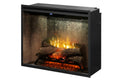
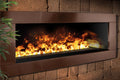
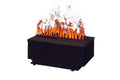
Flame effect type for the application. Standard electric flame effects and water vapor flame effects have different installation requirements. Water vapor units deliver the most realistic flame effect available without combustion, but they require proper enclosure preparation and airflow control. If you are specifying water vapor units across a building, that guidance needs to happen before framing — not after.
Local code review. Electric fireplaces are code-compliant in virtually all multi-family jurisdictions, but local amendments vary. Confirm with your AHJ (Authority Having Jurisdiction) that your specified unit meets any local requirements for multi-family residential use.
The Bottom Line: Compliance Risk Is a Specification Decision
The biggest compliance risks in multi-family buildings — venting failures, gas line inspection delays, combustion byproduct concerns, and post-occupancy service calls that re-open safety reviews — are not inevitable. They are largely a product of specification choices made early in the design process.
Specifying electric fireplaces across a multi-family project removes those risk categories before they become problems. That is not a marketing position. It is a practical outcome of how the technology works.
Checklist
- Confirm electrical panel capacity at the design stage — calculate load for simultaneous use across all units before rough-in begins.
- Request enclosure specs from your fireplace supplier before framing so dimensions and airflow clearances are built in from the start, not corrected later.
- Verify flame effect type requirements — if specifying water vapor units, confirm enclosure sealing and airflow control requirements with your supplier before drywall.
- Review with your AHJ that your specified electric fireplace model meets local multi-family residential code requirements.
- Work with a trade-focused electric fireplace supplier who can provide project-ready documentation, installation guidance, and spec support across multiple units — not just sell you a box.
- Eliminate venting and gas line items from your fireplace specification to reduce final inspection variables and shorten your path to occupancy certificate.
FAQ
Are electric fireplaces actually code-compliant in multi-family apartment buildings? Yes. Electric fireplaces are code-compliant for multi-family residential applications in virtually all U.S. jurisdictions. Because they produce no combustion, they are not subject to the venting, gas supply, or CO clearance requirements that apply to gas fireplaces. Always confirm with your local Authority Having Jurisdiction for any local amendments, but electric units are routinely approved in high-density residential construction.
What's the biggest compliance risk with gas fireplaces in apartment buildings that electric avoids? The most common failure points with gas fireplaces in multi-family buildings are venting termination errors, gas line pressure test failures, and CO detector placement requirements tied to combustion appliances. Any one of these can hold up an occupancy certificate across the entire building. Electric fireplaces eliminate all three categories because there is no combustion, no venting, and no gas supply involved.
Do electric fireplaces reduce maintenance service calls in apartment buildings? Yes, meaningfully. Electric fireplaces have no burner components, no gas valve, no ignition system, and no venting to degrade. The service events that do occur are limited to flame effect or heating components and do not involve any system that would trigger a secondary safety inspection. For property managers, fewer service calls also means fewer opportunities for compliance re-reviews.
What electrical requirements should developers plan for when specifying electric fireplaces across multiple units? Each electric fireplace draws a specific amperage load — typically on a dedicated 120V or 240V circuit depending on the model. In a multi-unit building, your electrical design needs to account for simultaneous use across floors. This is standard load calculation work, but it must happen at the design stage. Your fireplace supplier should provide exact electrical specifications before rough-in begins.
Can water vapor electric fireplaces be used in apartment buildings? Yes, and they deliver the most realistic flame effect available without combustion. However, water vapor units require proper enclosure preparation, airflow control, and sealing to perform correctly. In a multi-unit project, those requirements need to be built into the framing specification before drywall — not addressed after installation. Working with a supplier who provides installation guidance upfront prevents the most common performance issues.
How do electric fireplaces affect the final inspection process for a new apartment building? Electric fireplaces remove several common inspection variables from the final walkthrough. There is no venting to verify, no gas pressure test to coordinate, and no combustion appliance CO clearance to confirm. For inspectors, the fireplace line item becomes routine. For developers, that means fewer hold points between final inspection and occupancy certificate.
What should I look for in a supplier when specifying electric fireplaces across a large multi-family project? Look for a supplier who provides project-level support — enclosure specifications before framing, electrical load documentation for your contractor, and guidance on flame effect type selection for your application. A supplier who only fulfills orders without providing installation guidance creates risk on large multi-unit projects where the same installation mistake can repeat across dozens of units.
If you are in the design or specification stage of a multi-family project and want to review your fireplace options with someone who understands how these units perform across multiple installations, reach out directly. We can spec the right unit for your project and make sure your contractor has the installation documentation they need before framing begins.
Call us at 800-309-2144 or email Pro@electricfireplacesdepot.com — tell us about the project and where you are in the construction timeline, and we will take it from there.