1-800-309-2144
When designers ask which electric fireplace looks the most realistic in an actual installed space, the honest answer is: technology type matters more than brand, and the gap between marketing photos and real-room performance is significant. Water Vapor Fireplaces consistently deliver the most convincing flame effect of any electric option — full stop. But realism is not just about the flame bed. It depends on how the unit is installed, what surrounds it, and whether the technology was specified correctly for that environment.
Field experience across thousands of installations shows what actually works.
Why Does Flame Technology Determine Realism More Than Any Other Factor?
The flame effect is the product. Everything else — the surround, the mantel, the media — is framing. If the flame itself does not hold up under scrutiny, no amount of design work around it will save the visual.
There are three primary technologies in the electric fireplace market, and they perform very differently in a real room:
| Technology | How It Works | Realism Level | Key Limitation |
|---|---|---|---|
| LED reflective (standard electric) | Mirrors and LED strips project a flame image | Low to moderate | Flat, two-dimensional appearance |
| 3D LED / multi-layer projection | Multiple depth layers create a layered flame | Moderate to good | Still clearly artificial at close range |
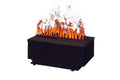
| Water vapor | Ultrasonic mist + LED backlighting creates actual three-dimensional "flame" | Highest available | Requires controlled installation environment |
The key takeaway: water vapor technology creates a flame that has actual physical depth and movement — light passes through real mist, not a reflected image. In a room with proper lighting conditions, it reads as fire in a way that LED-only units simply cannot replicate.
Standard LED units are frequently photographed to look impressive in marketing materials. In a real room, at a normal viewing distance, the flatness becomes apparent within minutes. Clients who are paying for a luxury focal point will notice.
What Does "Realistic" Actually Mean in an Installed Environment?
Realism in a real room is not a single variable. Designers specifying for client-facing projects need to evaluate it across four dimensions:
Does the flame have physical depth?
A flame that looks three-dimensional from across the room but collapses to a flat image when viewed from an angle is not truly realistic. Water vapor units maintain visual depth from multiple viewing angles because the mist itself occupies real space. This matters in open-plan living areas, great rooms, and any space where the fireplace is visible from more than one position.
Does the flame move naturally?
Natural fire is chaotic. It surges, drops, and shifts direction unpredictably. Many LED systems loop the same animation pattern every few seconds — something the human eye detects subconsciously even when the viewer cannot name what feels off. Better 3D LED units randomize the cycle. Water vapor units move with the actual air currents in the enclosure, which produces genuinely unpredictable movement.
Does the flame hold up in ambient light?
This is where most electric fireplaces fail in real installations. A unit that photographs beautifully in a dark room can look washed out in a bright living space. Water vapor flames, because they are backlit three-dimensional mist rather than a projected image, retain visual presence in well-lit rooms better than reflective LED units.
Does the media bed look credible?
Log sets, crystal media, and stone beds vary enormously in quality. A realistic flame effect undermined by a plastic-looking log set breaks the illusion immediately. When specifying for high-end residential or commercial projects, the media bed deserves as much scrutiny as the flame technology itself.
What Installation Factors Affect How Realistic an Electric Fireplace Looks?
The product is only part of the equation. Installation environment is the other half — and this is where most specification mistakes happen.
For water vapor units specifically, the enclosure must be built to control airflow. Cross drafts from HVAC vents, open windows, or poorly sealed enclosures disrupt the mist pattern and visibly degrade the flame effect. The unit can be performing perfectly and still look wrong if the surrounding environment is not prepared correctly. We see this repeatedly in the field: a premium unit underperforming not because of the product, but because the enclosure was not prepared to the installation guidelines.
For LED-based units, the key installation factor is the viewing distance and ambient light level. These units perform best in lower-light environments and at a distance that minimizes the two-dimensional quality of the flame. Placing a standard LED fireplace as a close-range focal point in a bright, modern interior is a specification that will disappoint.
Practical installation considerations that affect visual realism:
- Enclosure depth and width relative to the unit — too much dead space around the firebox diminishes the visual
- Surrounding material finish — matte, dark, or recessed surrounds increase perceived flame depth
- Ambient lighting — dimmable accent lighting near the fireplace allows the flame to dominate visually
- For water vapor units: enclosure sealing and distance from HVAC supply registers
How Do You Spec the Right Technology for Your Specific Project?
The right technology depends on the project type, viewing conditions, and client expectations — not on which unit has the most impressive spec sheet.
For high-end residential where the fireplace is the primary design feature and client expectations are at their highest, water vapor technology is the specification that delivers. The visual performance at close range and in ambient light conditions is in a different category from LED alternatives. One designer we worked with described it directly: "Their team prioritized customer service and offered helpful guidance in selecting the right fireplace for our client. The final result turned out beautifully."
For commercial hospitality, lobby applications, or multi-unit residential where the fireplace needs to perform reliably with minimal maintenance and the primary goal is architectural presence rather than close-range scrutiny, a high-quality 3D LED unit is often the right call. These units are more tolerant of varying installation environments and have fewer operational requirements.
For new construction versus retrofit, the question is how much control you have over the enclosure. New construction allows you to build the enclosure to spec — which opens the full range of options including water vapor. Retrofit projects with existing enclosures require a closer look at airflow conditions before specifying a water vapor unit.
The question to ask before specifying: what is the primary use — visual feature or supplemental heat? And what are the viewing conditions — close range or across a room, bright space or controlled lighting? Those two answers narrow the field significantly.
For designers working across multiple projects, the Electric Fireplaces Depot trade professional program provides direct access to premium and exclusive European luxury brands, factory-direct pricing, and the kind of specification guidance that prevents the field problems that reflect poorly on the designer's judgment.
The Bottom Line on Realistic Electric Fireplaces
Realistic flame performance in a real room comes down to technology type first, installation environment second, and product quality third. Water vapor technology delivers the most realistic flame effect available without combustion, but it requires a properly prepared enclosure to perform correctly. LED-based units vary widely in quality and are better suited to applications where installation conditions are variable or maintenance simplicity is the priority.
Spec the technology to the project conditions, not to the marketing photography.
Checklist
- Identify the primary use before specifying: is this a close-range luxury focal point or an architectural feature viewed from across a room?
- Evaluate ambient light conditions in the installed space — bright rooms require technology that holds up under light, not just in the dark
- For designers specifying water vapor units: confirm the enclosure can be built or modified to control airflow and seal against cross drafts
- Review the media bed quality alongside the flame technology — a weak media set undermines even the best flame effect
- For trade professionals managing multiple projects: confirm whether new construction or retrofit conditions apply before finalizing the technology spec
- Request installation guidelines before the enclosure is framed — changes after framing are costly and avoidable
FAQ
What type of electric fireplace looks the most realistic? Water vapor electric fireplaces deliver the most realistic flame effect currently available without combustion. They use ultrasonic mist backlit by LEDs to create a three-dimensional flame that has actual physical depth and unpredictable movement — qualities that LED-reflective units cannot replicate. The trade-off is that they require a properly controlled installation environment to perform at their best.
Do electric fireplaces look fake in real life? Standard LED electric fireplaces often look noticeably artificial at close range or in well-lit rooms because the flame is a two-dimensional projected image. Higher-quality 3D LED units improve on this significantly, and water vapor units can be genuinely difficult to distinguish from a real flame in the right installation conditions. Technology type and installation environment are the two biggest factors.
Does ambient lighting affect how realistic an electric fireplace looks? Yes, significantly. Reflective LED units lose visual impact in bright rooms because the projected image competes with ambient light. Water vapor flames retain more visual presence under ambient light because the mist is backlit and occupies real three-dimensional space. For high-end installations, dimmable accent lighting near the fireplace also helps the flame read as the dominant visual element.
What installation mistakes make an electric fireplace look less realistic? The most common issues are enclosure sizing that leaves too much dead space around the firebox, HVAC vents positioned too close to the unit (especially critical for water vapor), and surrounding finishes that are too bright or reflective. For water vapor units specifically, cross drafts from poorly sealed enclosures or nearby supply registers visibly disrupt the flame pattern and degrade the effect.
Can a water vapor fireplace work in a retrofit project? Yes, but it requires careful evaluation of the existing enclosure. The enclosure needs to be assessed for airflow control — specifically whether HVAC supply registers are nearby and whether the enclosure can be sealed adequately. New construction gives you full control over these conditions; retrofit projects require a closer look before specifying. Working with a knowledgeable source before the specification is finalized prevents the problems that show up after installation.
What should designers look for when specifying electric fireplaces for high-end clients? Prioritize flame technology type over brand recognition, evaluate the media bed quality independently from the flame effect, and confirm installation conditions before specifying water vapor units. The flame needs to hold up at close range, from multiple viewing angles, and in the ambient light conditions of the actual space — not just in a dark showroom or a marketing photograph.
Is a 3D LED fireplace good enough for a luxury residential project? A high-quality 3D LED unit can work well in luxury residential applications where viewing conditions favor it — lower ambient light, longer viewing distances, or spaces where reliability and low maintenance are priorities alongside aesthetics. For projects where the fireplace is the primary design feature and will be viewed up close in a well-lit room, water vapor technology is the stronger specification.
If you are working through a specification decision right now — whether it is a new build, a retrofit, or a multi-unit project — the team at Electric Fireplaces Depot can help you match the right technology to your actual project conditions. Call or text 800-309-2144, or reach the trade team directly at pro@electricfireplacesdepot.com.