1-800-309-2144

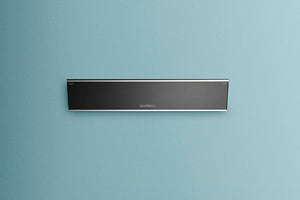
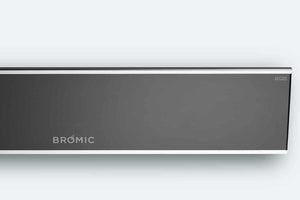
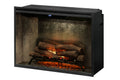
Yes, fireplaces remain a meaningful value-add in new condo units — and removing one to cut costs often costs more in buyer appeal than it saves in materials. In competitive multi-family markets, the fireplace is one of the few architectural features that registers immediately during a showing and shapes the buyer's perception of the unit's tier. The question isn't whether fireplaces matter. It's whether the traditional approach still makes sense — and for most new condo builds, it doesn't.
Modern electric fireplaces deliver the same visual impact without a gas line, venting, or the long-term maintenance liability that comes with combustion appliances in shared residential buildings.
Do Buyers Still Expect Fireplaces in Condo Units?
Buyer expectations in the mid-to-upper condo market have not shifted away from fireplaces — they've shifted away from builder-grade gas units that look dated and require ongoing service. The feature itself still signals quality. What buyers are rejecting is the version that looks like it came from a 1990s spec sheet.
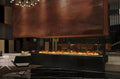
In premium urban and suburban condo projects, a fireplace functions as a luxury focal point. It anchors the living area, creates visual hierarchy in open floor plans, and photographs well — which matters more than ever in a market where most buyers form opinions before they ever walk through the door.
The risk of deleting the fireplace entirely isn't just about the feature itself. It's about what the absence communicates. In a competitive building, if comparable units down the street include a modern linear electric fireplace and yours doesn't, that gap shows up in showings, in negotiations, and eventually in absorption rate.
Why Are Builders Moving Away From Traditional Gas Units?
Gas fireplaces in multi-family buildings carry a specific set of complications that don't exist with electric alternatives. Each unit requires a dedicated gas line, venting that must be coordinated through the building envelope, and ongoing maintenance that typically falls to the building or the HOA. In high-rise or mid-rise construction, that coordination adds real cost and scheduling complexity.
From a liability and code-compliance standpoint, combustion appliances in dense residential buildings also introduce variables that most developers would rather avoid. The install complexity alone — framing, venting, gas supply, inspections — adds time and cost that compounds across a building with 30, 80, or 200 units.
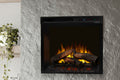
Electric fireplaces eliminate that entire category of risk. No gas line needed. No venting required. They integrate cleanly into most wall assemblies, require minimal maintenance, and scale consistently across multiple units without performance variability. One unit or one hundred — the install process is the same, the result is predictable, and post-install service calls are minimal.
For a developer managing timelines and subcontractor coordination, that predictability has real dollar value.
What Type of Electric Fireplace Works Best in Condo Units?
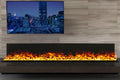
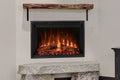
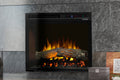
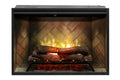
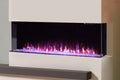
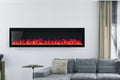
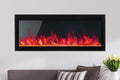
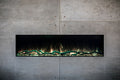
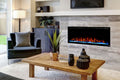
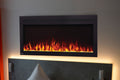
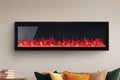
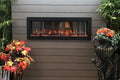
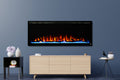
The right unit depends on the unit's price point, the wall assembly available, and the visual effect the project is trying to achieve. For most new condo construction, a built-in linear electric fireplace is the standard specification — it fits cleanly into a framed wall cavity, produces a modern linear aesthetic, and works with the flat, open floor plans common in new construction.
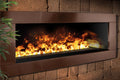
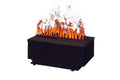
For projects targeting a luxury buyer who expects a premium flame presentation, Water Vapor Fireplace technology produces the most realistic flame effect available without combustion. These units create a three-dimensional flame using ultrafine water mist and LED lighting, with no heat, no emissions, and no combustion byproducts. They're safe for multi-family applications and deliver the kind of visual impact that reads as a genuine architectural feature rather than a builder add-on.
The honest trade-off with water vapor units is that they perform exceptionally well when installed correctly — and installation environment matters. Enclosure preparation and controlled conditions are part of the spec process. This is something Electric Fireplaces Depot guides through directly, because most installation issues we see in the field come from enclosure prep, not the unit itself.
| Fireplace Type | Venting Required | Gas Line | Maintenance Level | Best For |
|---|---|---|---|---|
| Traditional Gas | Yes | Yes | High | Legacy builds |
| Built-In Electric | No | No | Low | Standard condo spec |
| Water Vapor Electric | No | No | Low-Moderate | Luxury condo spec |
For most new condo projects, built-in electric is the clean, scalable answer. For luxury positioning, water vapor raises the presentation significantly.
How Do You Justify the Cost When You're Protecting Margins?
This is the real question developers are asking, and it deserves a direct answer. The cost of a premium electric fireplace unit is a fraction of what a gas installation costs when you factor in the gas line, venting, inspections, and long-term maintenance obligations. Removing the fireplace to save on materials often ignores the install cost differential — and completely ignores the sale price impact.
A fireplace isn't a luxury add-on in a competitive condo market. It's a specification decision that affects how the unit is positioned, how it photographs, and how buyers perceive the value tier. Buyers in the $400K–$700K condo range have a mental checklist of features that justify the price. A modern fireplace is on that list. Its absence is noticed.
Factory-direct pricing available for multi-unit projects makes the math easier to run. When you're speccing across 20, 50, or 100 units, the per-unit cost of a premium electric fireplace — without gas or venting — becomes a straightforward line item with a clear value return.
The designers and contractors who work with Electric Fireplaces Depot on multi-unit residential projects consistently find that the ordering and coordination process is simpler than expected. As one construction professional put it: "Order and delivery was easy to coordinate." That kind of operational reliability matters when you're managing a build schedule.
For developers who want to spec with confidence and protect both margins and market positioning, electric fireplaces for multi-unit residential projects is where the current market is heading — and where the math works.
Summary: Is Deleting the Fireplace Worth It?
Removing a fireplace from a new condo unit to save on costs is a short-term margin decision with long-term positioning consequences. The feature still signals quality, still drives buyer perception, and still differentiates units in competitive markets. What's changed is the delivery method — not the demand.
Modern electric fireplaces give developers a path to include the feature without the install complexity, venting requirements, or maintenance liability of traditional gas units. The result is a cleaner installation environment, predictable operating cost, and a luxury focal point that holds up through the life of the building.
Checklist
- Before removing a fireplace from your condo spec, compare the full cost of gas installation — including line, venting, inspections, and long-term maintenance — against a premium electric unit at factory-direct pricing.
- Confirm your wall assembly dimensions early so the electric fireplace spec is drop-in ready and doesn't require late-stage framing changes.
- For luxury condo developers targeting a premium buyer, evaluate water vapor fireplace technology as an upgrade option — it delivers a realistic flame visual without combustion and photographs exceptionally well for marketing materials.
- If you're speccing across multiple units, ask about multi-unit pricing — scaling a consistent electric fireplace specification across a building is straightforward and reduces post-install service calls.
- Review your competitive set before finalizing the spec decision: if comparable units in your market include a modern linear fireplace, removing yours creates a visible gap in perceived value.
- Confirm code compliance for your jurisdiction — electric fireplaces require no venting or gas permits, which simplifies the approval process in multi-family construction.
FAQ
Are fireplaces still worth including in new condo construction? Yes, in mid-to-upper market condo projects, fireplaces continue to influence buyer perception and unit positioning. The feature signals quality and anchors the living space visually — removing it saves on materials but can reduce perceived value in a competitive market. The more relevant question is whether a gas unit still makes sense, and for most new multi-family construction, it doesn't.
What's the difference between a gas fireplace and an electric fireplace in a condo build? Gas fireplaces require a dedicated gas line, venting through the building envelope, inspections, and ongoing maintenance — all of which add cost and coordination complexity in multi-family projects. Electric fireplaces require none of that: no gas line, no venting, and minimal maintenance. They integrate cleanly into standard wall assemblies and scale consistently across multiple units.
What type of electric fireplace is best for a luxury condo? For luxury condo projects, water vapor electric fireplaces deliver the most realistic flame effect available without combustion. They produce a three-dimensional flame using ultrafine mist and LED lighting, with no emissions and no heat output. Built-in linear electric units are the standard specification for most new construction; water vapor is the upgrade path for premium positioning.
Can electric fireplaces be specified across a large multi-unit building? Yes, and this is one of their primary advantages for developers. Electric units scale consistently across multiple units without performance variability. Factory-direct pricing is available for multi-unit projects, and the installation process is the same whether you're doing 10 units or 100 — no gas coordination, no venting inspections, and predictable timelines.
Do buyers actually notice or care if a condo doesn't have a fireplace? In competitive markets, buyers do notice — especially when comparable units include a modern linear fireplace. The absence of the feature doesn't always kill a sale, but it creates a perceived value gap that shows up in negotiations and absorption rate. A fireplace is one of the few features that registers immediately during a showing and photographs well for listings.
How do I justify the fireplace cost when protecting margins on a condo project? The comparison should be made against the full cost of a gas installation — gas line, venting, inspections, and maintenance obligations — not just the unit price. Electric fireplaces eliminate those costs entirely. At factory-direct pricing for multi-unit orders, the per-unit cost becomes a straightforward line item. The return shows up in buyer perception, competitive positioning, and final sale price.
Are electric fireplaces code-compliant in multi-family residential buildings? Electric fireplaces are generally well-suited for multi-family applications because they require no venting and no gas permits, which removes the most common compliance complications in dense residential construction. Always confirm requirements with your local jurisdiction, but the absence of combustion and venting typically simplifies the approval process compared to gas alternatives.
If you're deciding whether to keep or upgrade the fireplace spec on a current project, the specifics matter — unit size, wall assembly, buyer profile, and price tier all affect which direction makes sense. The team at Electric Fireplaces Depot works with developers and builders on exactly this kind of decision. Call or text 800-309-2144, or reach out directly at pro@electricfireplacesdepot.com to talk through the project and get a spec that works for your build.