1-800-309-2144
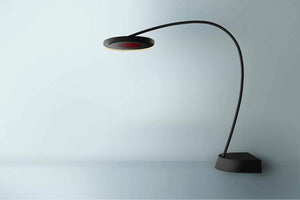
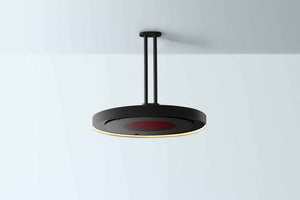

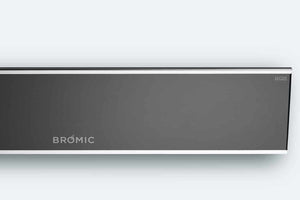
Evaluating a fireplace supplier for multi-unit projects comes down to one core question: can they perform at volume without variability? The right supplier has factory-direct inventory access, warehouse fulfillment infrastructure, consistent spec availability across batches, and post-install support that scales with your unit count. What follows is the framework trade professionals use to separate suppliers who can handle one-off retail sales from those who can actually deliver across a 20-, 50-, or 100-unit development.
What Volume Capacity Signals Should You Look for in a Fireplace Supplier?
The first thing to verify is whether a supplier's operations are built for volume or adapted from a retail model. These are structurally different businesses, and the difference shows up when you're on unit 18 of a 40-unit project.
Look for these specific signals:
- Factory-direct authorized dealer status. This means the supplier has a direct manufacturer relationship — not a third-party distributor adding a margin layer. Factory-direct dealers access inventory faster, resolve warranty issues without a middleman, and can provide consistent product availability across large orders.
- Warehouse fulfillment from owned inventory. Drop-shipping from a manufacturer works fine for a single unit. For multi-unit projects, you need a supplier who ships from their own warehouse with nationwide inventory access. That's what allows you to coordinate deliveries around construction phases rather than waiting on unpredictable lead times.
- Proven track record across multiple installs. Ask directly: how many multi-unit projects have you supported? A supplier who has worked on thousands of installs will recognize your project's constraints before you finish describing them.
Electric Fireplaces Depot ships from its own warehouse with nationwide inventory access and operates as a factory-direct authorized dealer — the same unit available on unit 1 is available on unit 40, at the same spec and the same pro price.
How Do You Verify Consistent Spec Availability Across Order Batches?
Inconsistent spec availability is one of the most common ways multi-unit projects get derailed. You specify a unit in pre-construction, orders go out in phases, and by phase three the SKU has changed, the trim kit dimensions are different, or the model is discontinued. That's not a minor inconvenience — it creates visible inconsistency across units that buyers and investors notice immediately.
When evaluating a supplier, ask these questions directly:
"Can you guarantee the same model, same SKU, and same trim configuration across all phases of my project?"
A supplier with real inventory depth and manufacturer relationships can answer this confidently. A supplier operating as a retail pass-through will hedge.
"What happens if a unit in a later phase is backordered?"
The answer tells you everything. A supplier with warehouse inventory and direct manufacturer access will have a resolution path. A supplier without that infrastructure will tell you to wait.
"Do you offer pro pricing that holds across the full project order?"
Factory-direct authorized dealers can provide best pro prices through a factory-direct model. That means your per-unit cost on phase one should match your per-unit cost on phase three — no retail price fluctuation mid-project.
What Post-Install Support Infrastructure Matters at Scale?
A single-unit retail sale ends at delivery. A multi-unit project doesn't. Post-install support — warranty resolution, replacement parts, troubleshooting guidance — needs to scale with your unit count, not treat each fireplace as a separate retail transaction.
The failure pattern looks like this: a supplier sells 30 units into a development, a warranty issue surfaces on units 7 and 14 six months after occupancy, and the supplier's support process requires each homeowner to contact the manufacturer directly. Now you have 30 potential warranty paths instead of one professional relationship managing them.
What to look for instead:
- Direct warranty support through the supplier. Factory-direct authorized dealers handle warranty claims directly with the manufacturer — you're not routing 30 residents through a manufacturer's consumer line.
- Expert guidance available after the sale. The best suppliers provide specification support upfront and troubleshooting support after install. That's what reduces post-install service calls and protects your reputation with buyers.
- A dedicated contact for trade professionals. Not a general customer service queue. A pro-facing team that knows your project, your specs, and your timeline.
A designer we worked with said: "Their team prioritized customer service and offered helpful guidance in selecting the right fireplace for our client. The final result turned out beautifully." That kind of relationship doesn't happen with a supplier treating each order as a one-off transaction.
And from a construction professional: "Order and delivery was easy to coordinate." At volume, easy coordination is not a nice-to-have — it's the difference between staying on schedule and absorbing costly delays.
How Do You Compare Local Suppliers Against National Specialized Suppliers for Multi-Unit Work?
Local fireplace installers and showrooms serve an important function for single-unit residential work. For multi-unit projects, the evaluation criteria shift significantly.
| Evaluation Factor | Local Installer/Showroom | National Specialized Supplier |
|---|---|---|
| Inventory depth for volume orders | Limited, often single-brand | Nationwide warehouse access |
| Factory-direct pricing | Rarely | Yes, through authorized dealer model |
| Consistent spec across phases | Variable | Controlled through direct manufacturer relationship |
| Post-install support at scale | Case-by-case | Structured pro support infrastructure |
| Warranty handling | Third-party routing | Direct manufacturer resolution |
| Product range (including European luxury brands) | Limited to regional distribution | Exclusive brands not available elsewhere online |
The key takeaway: local suppliers are not disqualified by geography, they're evaluated on infrastructure. If a local supplier has warehouse depth, factory-direct relationships, and a pro support team, they belong in your evaluation. Most don't — and that's the honest answer for multi-unit project planning.
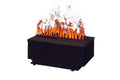
One specific product category worth noting for high-end multi-unit developments: Water Vapor Fireplace technology delivers the most realistic flame effect available without combustion and requires no venting — making it genuinely viable for multi-family applications where gas lines and venting are cost-prohibitive or code-restricted. The specification requirements are more detailed, but the client-facing visual impact is unmatched. A supplier who can guide that specification correctly — including enclosure preparation and airflow environment requirements — is worth significantly more than one who just ships the unit.
For trade professionals evaluating suppliers at this level, the Electric Fireplaces Depot trade professionals page outlines the pro pricing structure, fulfillment model, and support infrastructure in detail — worth reviewing before your next project spec meeting.
The Bottom Line: Supplier Evaluation Is a Risk Management Decision
Choosing a fireplace supplier for a multi-unit project is not a procurement decision — it's a risk management decision. One supplier who can't hold spec consistency, can't fulfill volume orders on schedule, or can't handle post-install warranty support at scale will create a pattern of problems that compounds across every unit in the development.
The evaluation framework is straightforward: verify factory-direct inventory access, confirm consistent spec availability across order phases, establish what pro pricing looks like across the full project, and understand exactly how post-install support works when something needs resolution at unit 22.
Suppliers who have worked on thousands of installs know what questions to ask before the first unit ships. That's the conversation worth having early — before the schedule is locked and the pressure is on.
Checklist
- Confirm the supplier is a factory-direct authorized dealer with a direct manufacturer relationship, not a distributor adding a margin layer.
- Ask specifically how they handle spec consistency across multi-phase project orders — same SKU, same trim, same configuration.
- Verify they ship from their own warehouse with nationwide inventory access, not drop-ship from a manufacturer on a per-order basis.
- Ask how post-install warranty support works at volume — who manages resolution, and is there a dedicated pro contact for your project?
- Request pro pricing that holds across the full project order, not just the initial phase.
- If you're a builder or developer specifying for multi-family applications, ask whether the supplier has experience with no-venting electric units and can guide the installation environment specification.
FAQ
What's the biggest mistake developers make when choosing a fireplace supplier for a multi-unit project? The most common mistake is evaluating a supplier based on a single-unit transaction and assuming that performance scales. Suppliers built for retail sales often lack the warehouse depth, pro pricing infrastructure, and post-install support systems needed for 20 or more units. Verify volume capacity explicitly before committing to a supplier for a multi-unit development.
Does factory-direct pricing actually make a difference across a large order? Yes, meaningfully so. A factory-direct authorized dealer bypasses distribution margin layers, which means pro pricing is lower per unit and more stable across order phases. On a 30- or 50-unit project, that per-unit difference compounds into a significant cost variance — and the pricing holds across phases rather than fluctuating with retail market conditions.
How do I make sure the same fireplace model is available across all phases of my project? Ask the supplier directly whether they can guarantee the same SKU, trim configuration, and spec across all order phases. Suppliers with owned warehouse inventory and direct manufacturer relationships can commit to this. Suppliers operating as retail pass-throughs cannot — they're dependent on manufacturer stock availability at the time of each order.
Are electric fireplaces actually viable for multi-family or multi-unit residential projects? Yes. Electric units require no venting and no gas line, which makes them well-suited for multi-family applications where venting runs are cost-prohibitive or restricted by code. They integrate cleanly into most wall assemblies, require minimal maintenance, and reduce post-install service calls — all of which matter when you're managing quality across dozens of units.
What should post-install support look like from a fireplace supplier on a large project? A qualified supplier handles warranty claims directly with the manufacturer rather than routing each homeowner through a consumer support line. They have a dedicated pro contact who knows your project specs and can troubleshoot issues without starting from scratch. That infrastructure is the difference between one resolution path and 30 separate ones.
How do water vapor fireplaces fit into multi-unit luxury developments? Water vapor fireplaces deliver the most realistic flame effect available without combustion and require no venting — making them viable for high-end multi-family projects where visual impact is a sales driver. They do require careful enclosure preparation and a controlled airflow environment to perform correctly. A supplier experienced with these units will guide the installation specification upfront, which prevents the most common field issues.
Can a national online supplier actually outperform a local fireplace dealer on a multi-unit project? It depends on infrastructure, not geography. A national supplier with warehouse fulfillment, factory-direct pricing, consistent inventory depth, and a pro support team will outperform a local dealer who lacks those capabilities on every measurable project metric. The evaluation criteria — inventory access, spec consistency, pro pricing, post-install support — apply regardless of where the supplier is located.
If you're in the planning stage of a multi-unit project and want to confirm specs, pro pricing, and fulfillment capacity before committing, reach out directly. Call or text 800-309-2144, or email the pro team at pro@electricfireplacesdepot.com. Bring your project details — unit count, construction phase, and intended use — and the conversation starts from there.