1-800-309-2144

For most new construction projects, electric fireplaces are the smarter choice. They require no gas line, no venting, and no framing complications — which means fewer subcontractors, fewer inspections, and a cleaner install that protects your timeline. Gas fireplaces deliver real combustion heat, but that infrastructure cost and complexity rarely pencils out when the primary goal is a high-impact visual feature.
The decision comes down to what the project actually needs, and most builders who work through the tradeoffs end up specifying electric.
What Does Gas Infrastructure Actually Add to a New Build?
Gas fireplaces require a dedicated gas line run to the unit, proper venting (direct vent or through-wall), a licensed gas contractor in most jurisdictions, and a separate inspection before drywall. In a single-family custom home, that's manageable. Across a multi-unit development or a project with tight framing tolerances, it compounds fast.
The venting path alone can create framing complications. Direct-vent gas units require a specific horizontal or vertical flue path, and those paths need to be planned before framing is finalized. A change order at that stage is expensive. A missed inspection is a schedule hit.
Beyond installation, gas fireplaces carry ongoing maintenance obligations — annual service, igniter replacement, thermocouple checks — that become your client's problem after handoff and occasionally yours if there's a callback.
Why Do Builders Increasingly Specify Electric Fireplaces in New Construction?
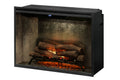
Electric fireplaces reduce install complexity and shorten install time in ways that matter on a real job site. There's no gas line to coordinate, no venting to frame around, no combustion to inspect. The unit goes into a prepared wall cavity, connects to a standard electrical circuit, and it's done.
For multi-family applications specifically, electric units are the cleaner path. No shared gas infrastructure, no unit-to-unit venting conflicts, no combustion safety concerns in high-density occupancy. They're safe for multi-family applications and integrate cleanly into most wall assemblies with minimal maintenance after handoff.
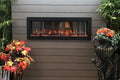
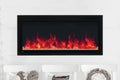
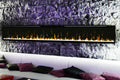
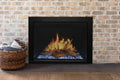
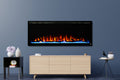
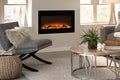
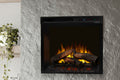
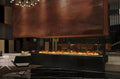
The visual result clients want — a linear, realistic flame effect, often behind glass, as an architectural focal point — is achievable with electric. Modern electric fireplaces have closed the gap significantly on flame realism, and for clients whose priority is aesthetics over BTU output, the distinction from gas is negligible in daily use.
One construction professional who has coordinated orders through Electric Fireplaces Depot put it simply: "Order and Delivery was easy to coordinate." That kind of predictability matters when you're managing multiple trades against a fixed close date.
How Do Electric and Gas Fireplaces Compare on the Factors That Actually Move a Project?
The comparison that matters for builders isn't flame realism in a showroom — it's what each option costs the project in time, coordination, and post-install exposure.
| Factor | Gas Fireplace | Electric Fireplace |
|---|---|---|
| Gas line required | Yes | No |
| Venting required | Yes (direct vent or B-vent) | No |
| Licensed gas contractor | Yes | No |
| Framing coordination | Required (venting path) | Minimal |
| Inspection requirements | Gas + venting | Standard electrical |
| Multi-family suitability | Complicated | Clean, code-compliant |
| Post-install maintenance | Annual service recommended | Minimal |
| Operating cost predictability | Tied to gas rates | Predictable |
Electric fireplaces win on every operational factor that affects a builder's margin and timeline. Gas wins only if the project has a specific heating capacity requirement that the specs demand, or if a client is explicitly requesting real combustion — a rare brief in most residential and mixed-use new construction today.
For projects where the fireplace is primarily a client-facing visual impact feature — which describes the vast majority of new construction specs — electric is the right call.
What About Water Vapor Fireplaces for High-End New Builds?
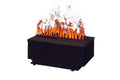
For luxury new construction where clients want the most realistic flame effect available without combustion, Water Vapor Fireplace technology is worth specifying. These units produce a three-dimensional flame effect using ultrasonic water vapor and LED lighting — the visual result is closer to real fire than any standard electric unit.
The tradeoff is installation precision. Water vapor units perform exceptionally well when installed correctly, but they require proper enclosure preparation to function as designed. The most common field issues — dust exposure, poor enclosure sealing, cross draft — are preventable when you get the spec right upfront.
The product is only part of the equation. The install environment matters equally, which is why getting guidance before framing is locked is worth the conversation.
What's the Right Call for Your Project?
For the majority of new builds — residential, multi-family, mixed-use — electric fireplaces are the builder-smart choice. They eliminate the infrastructure overhead of gas, reduce the number of trades and inspections involved, and deliver the architectural feature clients want without the post-install service exposure.
The question to ask before finalizing the spec isn't "gas or electric?" It's: what is the fireplace actually doing in this project? If the answer is "creating a luxury focal point in the living space," electric gets you there with less risk, lower coordination overhead, and a predictable operating cost for the client.
Builders and designers working on new construction projects can find pro-grade fireplace solutions at Electric Fireplaces Depot, where the spec conversation starts with the project details, not a product catalog.
Checklist
- Confirm whether the fireplace is serving as a visual/architectural feature or a primary heat source — this determines which technology is appropriate for your new build spec.
- Identify the framing stage: electric fireplaces require minimal advance coordination, but water vapor units need enclosure prep planned before drywall.
- For multi-family or mixed-use new construction, verify that your specified unit is safe for multi-family applications and meets local code without combustion-related inspection requirements.
- As a trade professional specifying for a client, document the spec decision — including why electric was chosen over gas — to protect yourself from post-install questions.
- If the client is requesting maximum flame realism in a luxury new build, evaluate water vapor technology and request installation guidance before the enclosure is built.
- Contact Electric Fireplaces Depot with your project details or plans before finalizing — getting the spec right before framing is locked eliminates the most common install problems.
FAQ
Is an electric fireplace as good as gas in a new construction home? For most new builds where the fireplace is a visual and architectural feature, electric fireplaces deliver comparable results without the infrastructure cost of a gas line, venting, and licensed contractor coordination. Gas has an advantage only when the project requires a specific combustion heat output — a requirement that's uncommon in most residential new construction specs today.
Do electric fireplaces require any special installation in new construction? Electric fireplaces require a standard electrical circuit and a properly prepared wall cavity or enclosure. There's no venting, no gas line, and no framing complications related to flue paths. Water vapor units have more specific enclosure requirements, but standard electric inserts and linear fireplaces are straightforward to integrate into new construction framing.
Can electric fireplaces be used in multi-family new construction? Yes. Electric fireplaces are safe for multi-family applications and are increasingly the preferred specification in condos, apartments, and townhome developments. They eliminate shared gas infrastructure, unit-to-unit venting conflicts, and combustion safety concerns that complicate multi-family builds.
What is the ongoing maintenance like for an electric fireplace vs. gas? Electric fireplaces require minimal maintenance after installation — no annual service calls, no igniter replacement, no thermocouple checks. Gas fireplaces typically require annual servicing to maintain safe operation. For builders managing client relationships post-handoff, electric units reduce post-install service calls significantly.
How realistic do electric fireplaces look compared to gas? Modern electric fireplaces have closed the visual gap considerably. For clients prioritizing aesthetics over BTU output, the difference in daily use is minimal. Water vapor fireplaces offer the most realistic flame effect available without combustion, producing a three-dimensional flame that closely mimics real fire — making them a strong specification for luxury new construction.
Does specifying electric instead of gas save time on a new build project? Yes. Eliminating gas line installation, venting coordination, and the associated inspections removes multiple scheduling dependencies from the project. Electric fireplaces reduce install complexity and shorten install time, which protects timelines and reduces the risk of delays tied to subcontractor availability or inspection scheduling.
What information should I have ready when specifying an electric fireplace for a new build? Have your framing dimensions, the intended wall assembly, whether the unit is going into a built-in enclosure or an open wall, and clarity on whether the primary purpose is heat or visual impact. Knowing the construction stage helps determine which unit and installation approach will give you the cleanest result with the least long-term maintenance.
When you're ready to finalize the spec, the team at Electric Fireplaces Depot is set up to work directly with trade professionals — whether you're building one custom home or scaling across a development. Call or text 800-309-2144, or reach the pro team directly at pro@electricfireplacesdepot.com with your project details and they'll recommend the right unit for your build.