1-800-309-2144

Running an electric fireplace typically costs between $25 and $90 per month, depending on wattage, heat settings, and how many hours per day it operates. Most standard 1,500-watt electric fireplaces running on high heat for four hours daily land somewhere in the $25–$45 range at the national average electricity rate. You can calculate your actual cost before you ever plug it in.
What Does the Math Actually Look Like?
The formula is straightforward: watts divided by 1,000 equals kilowatts, multiplied by hours of use, multiplied by your local rate per kilowatt-hour (kWh).
A 1,500-watt unit running four hours per day for 30 days uses 180 kWh per month. At the U.S. average rate of roughly $0.16 per kWh, that works out to approximately $28.80 per month on the high heat setting. Drop to the low heat setting (typically 750 watts) and that cost falls to roughly $14.40 per month under the same usage pattern.
Here is a quick reference across common usage scenarios:
| Wattage | Hours/Day | Monthly kWh | Est. Monthly Cost at $0.16/kWh |
|---|---|---|---|
| 1,500W (high heat) | 2 hrs | 90 kWh | ~$14.40 |
| 1,500W (high heat) | 4 hrs | 180 kWh | ~$28.80 |
| 1,500W (high heat) | 8 hrs | 360 kWh | ~$57.60 |
| 750W (low heat) | 4 hrs | 90 kWh | ~$14.40 |
| Flame-only mode | 4 hrs | ~6–12 kWh | ~$1.00–$2.00 |
When you run the visual display without the heater engaged, most electric fireplaces draw between 50 and 100 watts — roughly the same as a couple of light bulbs. For homeowners who want ambiance without actively heating a space, the cost is nearly negligible.
Your actual rate matters. Rates in states like Hawaii or California can run $0.25–$0.35 per kWh, which would push a four-hour daily habit closer to $45–$63 per month. States with lower utility rates may bring that same usage under $20. Check your utility bill for your specific rate before building a budget.
How Do Electric Fireplaces Compare to Wood and Gas on Real Operating Costs?
Electric fireplaces come out ahead on predictable operating costs when you account for the full picture — not just the fuel itself.
Wood fireplaces carry costs that rarely show up in initial comparisons: firewood at $200–$400 per cord depending on region, annual chimney cleaning typically running $150–$300, and the occasional liner repair or damper service. Those costs are variable and seasonal, meaning you cannot plan around them the way you can with electricity.
Gas fireplaces introduce gas line usage costs, annual servicing requirements, and in many cases pilot light consumption that runs continuously whether you use the fireplace or not. A standing pilot can consume 600–900 BTUs per hour around the clock — a cost that adds up quietly over a full year.
Electric fireplaces eliminate all of those ongoing expenses. No chimney. No gas line. No annual servicing. No venting required, which also means no heat loss through a flue that a wood or gas system creates by design. The operating cost you calculate is the operating cost you pay.
One customer who converted from a gas unit to a Modern Flames Orion Traditional noted that the process was straightforward and the ongoing maintenance picture changed entirely: "You folks at Electric Fireplaces Depot were a joy to work with and made the entire purchase and fulfillment process a breeze." The hidden costs of the previous system were simply gone.
Does the Type of Electric Fireplace Affect Monthly Costs?
Yes, and it is worth understanding the differences before you buy.
Standard electric fireplaces using LED flame technology draw between 750 and 1,500 watts on the heat setting, with minimal draw in flame-only mode. Their operating costs follow the straightforward math above.
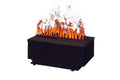
Water Vapor Fireplace units, which produce the most realistic flame effect available without combustion, have a slightly different operating profile. The ultrasonic mist system and lighting draw additional wattage compared to LED-only units. However, they are typically used more as architectural features or visual focal points, and many owners run them in display mode rather than as primary heat sources — which keeps monthly costs well within the same general range.
Larger units designed for hardwiring at 240 volts can deliver more heat output and draw more power accordingly. One customer noted specifically choosing the 36-inch model to hardwire at 240V for maximum heat output — a deliberate decision based on their heating goals. That flexibility matters: you can match the unit's capability to your actual use case rather than over-buying wattage you will never use.
Most homeowners overestimate how much they will run the heater. The majority use their electric fireplace primarily for ambiance, running the flame display for several hours in the evening without engaging the heat function at all. In those real-world patterns, monthly costs often land below $10.
Are There Hidden Costs With Electric Fireplaces That People Miss?
With wood and gas, the hidden costs are structural: chimney maintenance, gas line fees, professional servicing requirements, and the energy lost through venting. Electric fireplaces carry none of those. What you see in the operating cost calculation is what you actually pay.
The one area where costs can shift unexpectedly is electricity rate changes from your utility provider. Because electric fireplaces are entirely dependent on your local rate, a rate increase affects your operating cost directly. That said, the transparency of the calculation means you always know exactly where you stand — there are no surprise service bills or fuel delivery charges.
From a carbon footprint perspective, electric fireplaces reduce emissions compared to wood and gas alternatives. As the electrical grid continues to incorporate more renewable energy sources, the environmental cost per kilowatt-hour continues to improve over time — something that is not true of burning wood or gas.
What This Means for the Eco-Conscious Homeowner
Running an electric fireplace costs roughly $15–$60 per month depending on usage, with flame-only operation costing almost nothing. That range is fully calculable before purchase, fully predictable month to month, and free of the variable maintenance expenses that make wood and gas fireplaces difficult to budget around.
The sustainable choice and the financially responsible choice are the same choice here. You are not trading cost clarity for environmental values — you are getting both.
For homeowners exploring options, Electric Fireplaces Depot's premium electric fireplaces product category includes units across wattage ranges, sizes, and flame technologies, so you can match the right unit to your actual heating needs and usage patterns rather than guessing.
If you want help working through the math for your specific space — square footage, usage habits, local electricity rate — reach out directly. Call or text 800-309-2144, or email sales@electricfireplacesdepot.com. The right unit for your project is a specific answer, not a general one, and we are glad to help you find it.
Checklist
- Calculate your estimated monthly cost before purchasing: watts / 1,000 x daily hours x 30 x your local kWh rate.
- Check your utility bill for your exact per-kWh rate — national averages can be 40–50% lower than rates in high-cost states.
- Decide upfront whether you plan to use the unit primarily for heat, primarily for ambiance, or both — this determines the wattage tier that makes sense for your home.
- If you are a homeowner converting an existing wood or gas fireplace to electric, factor in the ongoing costs you are eliminating (chimney cleaning, gas service, annual maintenance) when comparing total cost of ownership.
- Ask about hardwiring options if you want maximum heat output — some units support 240V hardwiring for higher performance.
- Review the flame-only operating cost separately from the heat setting cost — for many homeowners, this is the number that matters most day to day.
FAQ
How much electricity does an electric fireplace use per hour? A standard 1,500-watt electric fireplace on the high heat setting uses 1.5 kWh per hour. On the low heat setting (typically 750 watts), it uses 0.75 kWh per hour. In flame-only mode without the heater engaged, most units draw between 50 and 100 watts, or 0.05–0.10 kWh per hour.
Is it expensive to leave an electric fireplace on all day? Running a 1,500-watt unit on high heat for eight hours per day adds up to roughly $57.60 per month at the national average electricity rate of $0.16 per kWh. However, most homeowners do not run the heater continuously — using the flame display without heat dramatically reduces that figure to under $5 per month for the same daily usage.
Do electric fireplaces cost more to run than central heating? It depends on your home's heating system and local energy rates. Electric fireplaces are most cost-effective when used for zone heating — warming one room you are actively using rather than heating the entire home. Running central heating to warm unused rooms while you are in one space typically costs more than supplementing with a targeted electric fireplace.
What is the cheapest way to run an electric fireplace? Use the flame-only mode when you want ambiance without active heating. When heat is needed, use the low setting (750 watts) rather than the high setting, and use the thermostat feature if your unit has one — it cycles the heater on and off to maintain a set temperature rather than running continuously.
Does an electric fireplace increase your electric bill significantly? At typical usage patterns — two to four hours of evening use with a mix of heat and flame-only modes — most homeowners see a monthly electricity increase of $15–$35. That range is predictable and calculable, unlike the variable fuel and maintenance costs associated with wood and gas fireplaces.
Are water vapor fireplaces more expensive to run than standard electric fireplaces? Water vapor fireplaces use ultrasonic mist technology to produce a highly realistic flame effect, which draws slightly more power than LED-only units in display mode. However, because they are often used as architectural visual features rather than primary heat sources, many owners run them in display mode where operating costs remain low — comparable to or only modestly higher than standard electric units.
Can I run an electric fireplace overnight to save on heating costs? Running an electric fireplace overnight on low heat is safe from an operational standpoint, but whether it saves money depends on your home's insulation, your local electricity rate, and what you are comparing it to. For zone heating a bedroom while lowering the whole-home thermostat, it can reduce overall heating costs. Review your unit's manufacturer guidelines for overnight operation recommendations.