1-800-309-2144

Converting a wood or gas fireplace to electric comes down to three things done correctly: accurate measurements, choosing the right insert type for your specific opening, and planning the finishing details before you buy. Get those right and the project is straightforward. Skip any one of them and you end up with a unit that doesn't fit, a gap you can't close, or a cord you can't hide.
Electric Fireplaces require no venting and no gas line, which removes the two biggest installation headaches of traditional fireplaces. But that simplicity can create overconfidence. The number of conversions that stall - or get redone - because someone skipped the measurement step or ordered without asking about finishing pieces is higher than most people expect.
What actually matters when converting a wood or gas fireplace to electric.
What electric fireplace types are the most commonly used for converting existing wood or gas burning fireplaces to electric?
Two insert categories cover the vast majority of existing fireplace conversions: log-style inserts and conversion style fireboxe inserts. Choosing between them depends on your opening size, your aesthetic goal, and how much finishing work you want to do.
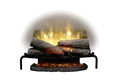
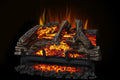
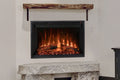
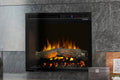
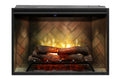
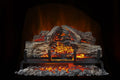
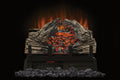
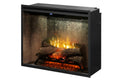
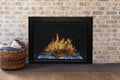
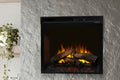
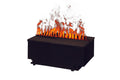
Log-style inserts are designed to sit inside an existing firebox and replicate the look of a traditional wood fire with logs and glowing embers. They typically plug into a standard outlet, slide into the opening, and require minimal framing. If your opening is a conventional rectangular shape and you want a classic hearth appearance, a log insert is often the fastest path to a finished result. Mot commonly used models are: Dimplex Revilusion Logs, Napoleon Wood land, Aquafire Gatsby. One customer shared: "We are converting our wood fireplace to electric and are awaiting the electrician to install the plug. In the meantime it is sitting on the hearth. We love it."
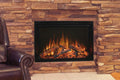
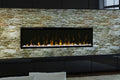
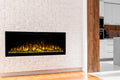
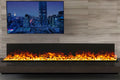
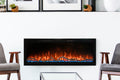
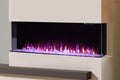
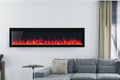
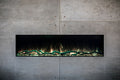
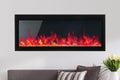
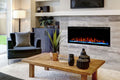
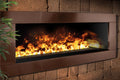
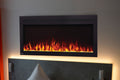
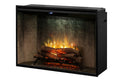
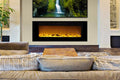
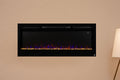
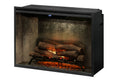
Conversion Style Fireboxes Inserts - suit homeowners who want a full fireplace look instead of just log set. Conversion style firebox inserts provide variety of flame styles and flame technologies. From traditional to more modern look. Available flame technologies are LED, LCD Digital, Holographic, Water Vapor. These firebox insets are specifically designed to fit into the majority of the traditional square shape wood burning and gas burning fireplaces. Majority of them taper just like existing fireplaces do and many come with selection of trim kits. These units recess into the opening and trim kits help cover the gap that fireplace may not cover. Most commonly used models are: Modern Flame Orion, Modern Flame Redstone, Napoleon Elevation, Napoleon Cineview, Simplifire INS models, Dimplex Revillusion Fireboxes
The 2 important deciding factors are usually the opening dimensions and the visual outcome you want. Measure first, then decide.
How to Measure an Existing wood or gas buring firepalce opening before buying an Electric Insert?
Correct measurement of width, height, and depth is the single most important pre-purchase step in any conversion. An insert that is even slightly oversized will not slide in. One that is significantly undersized leaves gaps that require additional finishing work you may not have planned for.
Measure at three points:
-
Width: Measure the width of the firebox at the front opening, the middle, and the back. Old masonry openings are rarely perfectly square. Most of existing wood burining fireplaces taper. This is important to know. It will determine what type of the insert you can put in.
-
Height: Measure the opening height at the front of the fireplace. If the firepalce tapers in height then meaure height in the middle and back of the exisitng fireplace.
-
Depth: Measure from the front face of the firebox to the back wall. Many older fireboxes are shallower than they appear.
Write all three down before you contact a dealer or configure a product. One customer who converted a gas fireplace noted: "Gas border is wider on top and sides to cover seams, but there is no border on the bottom. They did that so it can free-stand on the floor, but glad I noticed at the last minute to get the measurements right." That kind of last-minute catch is avoidable when dimensions are confirmed upfront.
For electric fireplace insert for existing fireplace opening questions specific to your opening type, the answer almost always starts with those three numbers.
What Are the Most Common Mistakes in a Fireplace Conversion?
Most conversion problems fall into a short list of recurring errors. Knowing them in advance is the difference between a clean install and a frustrating redo.
1. Buying before measuring. The most common mistake by far. Dimensions look obvious until the unit arrives and the depth is 2 inches short.
2. Ignoring the gas line on a gas-to-electric conversion. Before any electric insert goes into a gas fireplace, the gas supply must be properly shut off. This is not optional and is not something to defer until after installation. The insert itself does not interact with the gas line, but an open or improperly capped line is a safety issue regardless.
3. Skipping the finishing plan. An insert that fits the firebox opening precisely is rare. Most installations need a trim kit, a surround extension, or shims to close the gap between the insert face and the existing surround. Ordering these after the fact adds time and cost that could have been planned from the start.
4. Underestimating electrical needs. Many log inserts plug into a standard 120V outlet, but fireboxes - especially those with 240V heaters - require a dedicated circuit. If that outlet doesn't exist inside or near the firebox, an electrician needs to be involved before installation day. For a fuller breakdown of when professional electrical work is needed, the article on electric fireplace installation electrician covers the decision clearly.
5. Cord routing as an afterthought. A cord that exits the insert and runs visibly across the hearth or up the wall undoes the visual impact of the whole project. Plan cord routing before the insert is placed: determine where the outlet is, whether it can be relocated inside the firebox cavity, and whether a cord cover or in-wall conduit is needed. This is far easier to address before the surround is finished than after.
6. Choosing the wrong insert for the aesthetic. A log-style insert in a sleek, modern surround looks mismatched. A modern firebox would be a better choice. iThe insert type and the surrounding architecture need to be considered together.
What Finishing Pieces Do You Need to Close Gaps Around an Insert?
This is the step most conversion guides skip, and it's where projects stall. Almost no insert fills an existing opening flush on all four sides without additional finishing work.
The pieces you may need include:
-
Trim kits: Manufacturer-supplied frames that attach to the insert face and overlap the surround opening, covering gaps of 1 - 3 inches on each side. Not every insert includes one; confirm before ordering.
-
Surrounds and mantels: If the existing surround is being replaced or upgraded as part of the conversion, the new surround dimensions need to be coordinated with the insert size - not chosen independently.
-
Shims and filler panels: For openings that are significantly larger than the insert, especially in masonry fireplaces, filler panels or custom framing may be needed before the insert is placed.
Clearance requirements vary by unit. Amantii's installation manual states a minimum clearance to combustibles of 0 on the sides, floor, and back, with 7.88 inches (200 mm) minimum at the top for a mantel or TV. Always confirm the clearance specs for the specific unit you're installing before finalizing the surround design.
Is the Conversion Worth It Right Now?
The short answer is yes - and the comparison with gas is increasingly one-sided on the practical side. Gas-to-electric conversions eliminate the gas line, the venting, the combustion byproducts, and the ongoing maintenance associated with burners and pilots. One customer who replaced a ventless propane unit described it as removing an "ugly, stinky" appliance they could only run for a few minutes before it affected air quality.
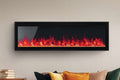
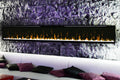
On cost, the variables that drive it are the insert category (log vs. linear), whether a dedicated circuit is needed, and what finishing work the opening requires. A plug-in log insert into a ready opening with an existing outlet is at the lower end of total project cost. A linear firebox with a 240V circuit, a new surround, and a trim kit sits higher. Neither number is fixed - it depends on your specific opening, your electrical situation, and the unit you choose.
The flame-only mode that electric fireplaces support independently of the heater means you can run the visual effect year-round without adding heat - something a gas fireplace cannot do without burning fuel.
At Electric Fireplaces Depot, every fireplace we sell is backed by real manufacturer relationships, factory-direct pricing, and the kind of straight answers, expertise and support you won't find on affiliate sites. That matters most during a conversion, when the questions are specific and the answers need to be right before you buy.
Checklist
-
Measure firebox width, height, and depth before selecting any insert - use the smallest measurement at each dimension.
-
Confirm whether your conversion requires a log-style insert or a linear built-in firebox based on opening size and visual goal.
-
For gas fireplace conversions, have the gas supply properly shut off before installation begins.
-
Identify where the outlet is located relative to the firebox and plan cord routing before the insert is placed.
-
Ask the manufacturer or dealer whether a trim kit is included or sold separately, and confirm it covers your specific gap dimensions.
-
Verify clearance requirements for your chosen unit before finalizing the surround or mantel design.
FAQ
Which insert type is better for a traditional brick fireplace - a log insert or a firebox?
Both are great choice. The choice will depend on the desired finished look, budget and dimesions. The log and ember bed aesthetic aligns with the existing architecture, and log inserts are typically sized to fit conventional rectangular openings without extensive finishing work. Also they are less ecpensive. A firebox will give a complete fireplace look with much more soficticated flames, embers and flame technology options but it may require additional trim kits and adjustments to fit properly.
How do I handle the gas line when converting a gas fireplace to electric?
The gas supply must be properly shut off before any electric insert is installed in a gas fireplace. This typically means having the line capped by a qualified professional. The electric insert itself does not interact with the gas line, but an open or improperly closed line is a safety issue that exists independently of the fireplace installation.
Who should I contact if I'm unsure whether my firebox dimensions will work with a specific insert?
Contact a specialty dealer - not a general marketplace - before purchasing. A dealer with genuine product expertise can review your measurements, confirm whether a specific unit fits your opening, and identify what finishing pieces you'll need. Electric Fireplaces Depot works directly with manufacturers and can help you spec the right unit for your specific opening before you commit.
Which clearance requirements should I check before installing an insert near a mantel?
Clearance requirements vary by manufacturer and model. As one example, Amantii's installation manual specifies a minimum of 7.88 inches (200 mm) from the top of the unit to a mantel or TV. Always check the installation manual for the specific unit you're purchasing - do not assume clearance specs transfer between models or brands.
Can I run the flame effect without the heater after converting to electric?
Yes. Electric fireplaces support flame-only mode independent of the heater, which means you can use the visual effect in any season without adding heat to the room. This is one of the practical advantages of converting from gas or wood, neither of which can produce ambiance without combustion.
If you have a specific opening and want to confirm the right insert type, trim kit, and electrical setup before ordering, reach out to Electric Fireplaces Depot directly. Call or text 800-309-2144, email sales@electricfireplacesdepot.com, or browse the full conversion range at electricfireplacesdepot.com.
Add Electric Fireplaces Depot as a preferred source on Google