1-800-309-2144

Buying an electric fireplace without regret comes down to one thing: getting the right information before you spend money, not after. The biggest mistakes homeowners make are not about product quality - they are about buying the wrong type, the wrong size, or from the wrong source because the information they found online was incomplete, outdated, or written to sell rather than to inform. This guide walks through every decision point so you can buy with confidence.
What Makes Electric Fireplace Shopping So Confusing Right Now?
The market for Electric Fireplaces has grown significantly, and that growth has flooded the internet with affiliate content, generic product listings, and marketing copy dressed up as advice. In 2026, a buyer searching for guidance is as likely to land on a commission-driven review site as on a source with real product expertise.
The pattern we see repeatedly: a homeowner spends weeks researching, picks what looks like the right unit, and only discovers the problem - wrong depth for their opening, wrong mount type for their wall, or a brand with no reachable support - after the product arrives.
When trade professionals who have completed dozens of projects ask us "which brands should we avoid?", our honest answer is always the same: the brand name matters less than the company behind it. How long have they been operating? Is there a real phone number on their website, and does someone actually answer it? What happens when a part is damaged or a component stops working? Those questions separate reliable suppliers from listing-only sellers. The same logic applies to homeowners buying a single unit.
A clear framework makes the decision straightforward. You do not need to become an expert - you need to ask the right questions in the right order.
What Are the Most Common Mistakes Buyers Make Before They Purchase?
What Are the Differences Between Electric Fireplace Types?
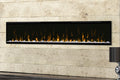
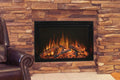
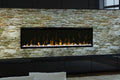
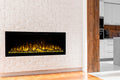
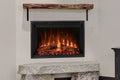
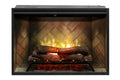
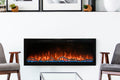
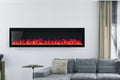
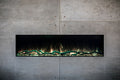
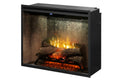
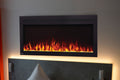
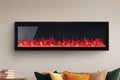
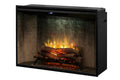
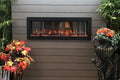
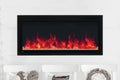
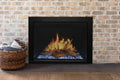
Electric Fireplaces come in four primary formats, and they are not interchangeable. A wall-mounted unit hangs on a finished surface with no recess required. A built-in unit recesses into a wall cavity or a purpose-built enclosure. A Firebox Inserts slides into an existing masonry or prefab opening. Each has specific framing, clearance, and electrical requirements. Buying the wrong type means either returning the unit or modifying your space at additional cost.
For a full breakdown of how these three formats differ, the article on wall-mounted vs built-in vs insert electric fireplace covers each scenario in detail.
Are All Electric Fireplace Flame Effects the Same?
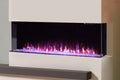
They are not. Entry-level units use a simple LED projection. Mid-range and premium units use multi-layer 3D flame systems with independent ember beds, adjustable color temperatures, and depth that reads as convincingly real at close range. If visual impact matters to you - and for a renovation focal point, it usually does - comparing flame technology before you buy is not optional. The Most Real Luxury Fireplaces category exists specifically because this distinction is one of the most searched questions we receive.
What Happens If I Buy from a Source with No After-Sale Support?
A product listing is not a supplier. One customer shared this directly: "The representative who answered my questions, and guided me through the online purchase was very patient, helpful, and nice. It is great experience to me to buy this fireplace from your company. I have recommended your product, and service to my friends, relatives, and my coworkers." That kind of guided purchase experience is what prevents the wrong-unit problem from happening in the first place.
How Do You Evaluate Whether a Brand or Supplier Is Actually Reliable?
This is where most online advice falls short, because it focuses on product specs and ignores the company behind the product.
We carry approximately 19 brands at Electric Fireplaces Depot. We were approached by more manufacturers than that, and we turned some down - not always because of product quality, but because of concerns about support infrastructure, parts availability, and long-term reliability as a supplier. The same scrutiny you should apply to a brand, apply to whoever is selling it to you.
Four tests worth running before you buy:
-
Find the manufacturer's customer service phone number. If you cannot find one on their website, that is a warning sign. It may mean the company does not want inbound calls, which tells you something about the support experience you will have if something goes wrong.
-
Call it before you purchase. A phone number that goes nowhere is worse than no number at all. Ask a basic installation question. The quality of that interaction tells you exactly what post-purchase support looks like.
-
Look for consistent patterns in reviews - not just the star rating. Unhappy customers leave reviews more reliably than satisfied ones. One or two complaints are noise. Repeated complaints about unanswered warranty claims, missing parts, or unreachable support are a signal.
-
Check how long the company has been operating. A long operating history means developed replacement-parts systems, refined products, and an established support department. A newer brand may still produce good products, but the uncertainty is higher.
One customer described the experience of calling before purchasing: "Called to glean additional information and customer service was able to provide guidance on the best unit to purchase. I received the unit within a few days. I was able to install the unit within a few hours. The unit is wonderful and is a fantastic, or efficient replacement to my +20 gas fireplace!" That is what a reliable buying experience looks like.
For a deeper look at how to evaluate electric fireplace brands before committing, that question has its own dedicated article.
How Do You Match the Right Product to Your Specific Situation?
No single brand or model is best for every project. The right fireplace depends on a specific set of variables, and getting them right before you order is what separates a smooth installation from a frustrating return.
| Variable | Why It Matters |
|---|---|
| New build vs. retrofit | Determines whether framing is available or an existing opening constrains the size |
| Existing opening dimensions | Governs which insert sizes are viable |
| Wall depth available | Rules in or out recessed built-in formats |
| Intended use (visual only vs. supplemental heat) | Affects which technology and output level to specify |
| Budget | Determines which flame technology tier is realistic |
| Style preference | Linear, traditional, corner, or see-through each serve different room layouts |
If you are converting a wood or gas fireplace to electric, the opening dimensions are the starting point. If you are building from scratch, you have more flexibility - but that flexibility is also where over-specifying or under-specifying happens most often.
One customer put it plainly: "They were also extremely helpful in answering questions needed to help guide me to purchase the correct product. Although our reno project is ongoing, we put the fireplace together with no problem to see how beautiful it will look. We can't wait until it's installed. Any doubts about electric fireplaces are gone. This product is awesome!"
Another described an honest conversation that changed their purchase: "Got some advice from the seller on options to buy. Talked me out of it and glad they did. I appreciate their honesty and purchased the fireplace with confidence."
That is the difference between a credible source and a listing page.
What Should You Know About Water Vapor Fireplaces Before Deciding?
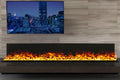
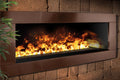
Water Vapor Fireplace technology produces the most realistic flame effect available without combustion - real water mist illuminated by LED creates a three-dimensional flame that looks and moves like real fire. For homeowners who want maximum visual impact and are willing to manage a slightly more involved setup, it is worth serious consideration.
The important distinction: water vapor units have specific installation requirements that standard electric fireplaces do not. The enclosure preparation, the water reservoir, and the environment around the unit all affect performance. This is not a reason to avoid them - it is a reason to go in informed.
For a direct comparison of what each technology requires, the article on water vapor fireplace installation requirements covers the practical differences side by side.
How Do You Make Sure the Purchase Goes Smoothly End to End?
The product is only part of the equation. Delivery, installation readiness, and post-purchase support all affect whether the experience is positive or frustrating.
Before you place an order, confirm:
- The unit dimensions match your opening or planned enclosure, with manufacturer-specified clearances accounted for
- Your electrical supply matches what the unit requires (check the manufacturer's spec sheet, not a general estimate)
- You know whether the unit ships via freight or parcel, and whether you need to arrange receiving
- You understand the return and warranty terms before the unit ships, not after it arrives
From first question to final install, Electric Fireplaces Depot is the credible source trade professionals and homeowners rely on to choose the right fireplace the first time. That means the conversation happens before the order, not after a problem surfaces. Our Electric Fireplaces Depot Buyer's Guide is a useful reference to have open alongside any product page as you compare options.
Checklist
- Identify your install type first. Determine whether you need a wall-mounted, built-in, or insert format before comparing any specific products - the wrong type cannot be corrected after delivery without cost.
- Measure the opening or wall cavity before you shop. For retrofit projects, measure height, width, and depth of the existing opening; for new builds, confirm framing dimensions match the unit's rough-in requirements.
- Call the manufacturer's support line before you buy. Ask one technical question. If no one answers or you cannot find a number, treat that as a serious warning about post-purchase support.
- Match the flame technology to your expectations. If the fireplace is a visual focal point in a renovation, compare flame realism tiers - not just wattage or price - before deciding.
- Confirm your intended use: visual feature, supplemental heat, or both. This determines which product category and output level is appropriate for your space.
- Review the warranty and return policy before placing the order. Understanding the terms when everything is fine is far easier than trying to navigate them when something goes wrong.
FAQ
Who should I actually trust for electric fireplace advice online? Most electric fireplace content online is written by affiliate sites that earn a commission on every sale, regardless of whether the product fits your situation. Look for a source that represents multiple brands, provides direct manufacturer relationships, and has a reachable support team you can call with a specific question. The quality of the pre-purchase conversation is usually a reliable indicator of the post-purchase support you will receive.
Which type of electric fireplace is right for a renovation with an existing opening? An electric fireplace insert is designed specifically for existing masonry or prefab openings. The critical step is measuring the opening correctly - height, width, and depth - before selecting a unit. If the existing opening is too shallow for a standard insert, a wall-mounted unit may be a better fit. The article on how to measure fireplace opening for electric insert walks through the measuring process in detail.
What is the real difference between a standard electric fireplace and a water vapor fireplace? A standard electric fireplace uses LED projection to simulate flame. A water vapor fireplace uses ultrasonic technology to produce real water mist illuminated by LEDs, creating a three-dimensional flame effect that closely resembles real fire. Water vapor units tend to cost more and require more specific installation preparation, but the visual result is meaningfully more realistic. The article on water vapor fireplace vs electric fireplace realism covers this comparison directly.
How much should I expect to spend on a quality electric fireplace? Cost depends on several factors: the format (insert, built-in, or wall-mounted), the flame technology tier, the size, and the brand. Entry-level units with basic LED effects sit at the lower end of the range; premium units with multi-layer 3D flame systems, realistic log sets, and smart controls occupy a significantly higher tier. The most useful question is not "what is the lowest price?" but "what level of realism and reliability do I need for this space?" - that answer determines the appropriate budget range.
Are electric fireplaces actually safe to leave running for long periods? Yes, when used as directed. Electric fireplaces do not produce combustion, no gas line is needed, and no venting is required - the primary safety risks associated with gas and wood fireplaces are not present. Most units include automatic overheat protection and timer functions. For a full breakdown of safe operating practices, the article on electric fireplace safe to leave on overnight addresses this question directly.
Which brands are considered the most reliable in the electric fireplace market right now? There is no single best brand across every category. One manufacturer may lead in traditional insert formats while another specializes in premium linear designs or water vapor technology. The more useful question is whether the brand behind the product has a long operating history, a reachable support team, a clear warranty, and a parts infrastructure - and whether the specific model fits your project's requirements. Evaluating those factors matters more than brand name recognition alone.
What questions should I answer before contacting a fireplace dealer? Know your install type (new build or retrofit), the dimensions of your space or existing opening, whether you need supplemental heat or purely visual ambiance, and your approximate budget. Having those answers ready makes the product recommendation faster and more accurate - and it makes it easier to spot when a recommendation does not actually fit your situation.
If you are ready to narrow down your options or want to talk through your specific project before ordering, the Electric Fireplaces Depot team is available to help. Call or text 800-309-2144, email sales@electricfireplacesdepot.com, or browse the full range at https://electricfireplacesdepot.com/. The right conversation before the purchase is what prevents the wrong product from showing up at your door.
Add Electric Fireplaces Depot as a preferred source on Google