1-800-309-2144

Water vapor fireplaces deliver the most realistic flame effect available without combustion — full stop. For luxury custom builders specifying a focal point that has to hold up under client scrutiny, that distinction matters. The tradeoff is that water vapor units require precise enclosure preparation and airflow control to perform correctly, while electric fireplaces offer premium visual quality with near-zero installation complexity. The right choice depends on how much installation control your project allows and what level of flame realism the client actually requires.
What Makes a Flame Look Real in a High-End Fireplace?
Realistic flame in a modern fireplace comes down to three visual elements: depth, movement, and light behavior. A flame that looks flat, loops on a predictable cycle, or casts uniform light reads as artificial — and in a luxury space, clients notice.
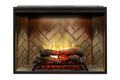
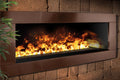
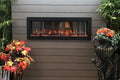
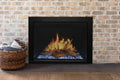
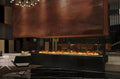
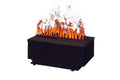
Water Vapor Fireplace technology uses ultrasonic mist, LED lighting, and layered optical depth to produce a three-dimensional flame effect that moves with genuine unpredictability. The mist is real — it rises, curls, and catches light the way combustion flames do. You can reach your hand into the firebox without getting burned. That physical reality is what separates water vapor from every other flameless technology: the effect is not a simulation of fire, it is water behaving like fire.
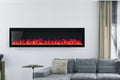
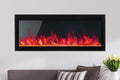
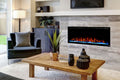
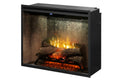
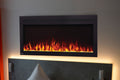
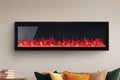
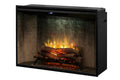
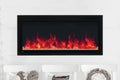
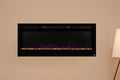
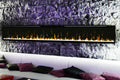
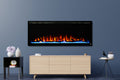
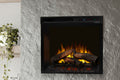
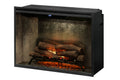
Electric fireplaces have closed the gap significantly. Modern units use multi-layer LED arrays, mirrored fireboxes, and realistic log or ember bed detailing to produce a flame visual that reads as premium in most residential and commercial applications. The effect does loop, but high-end electric units extend that cycle long enough that it rarely registers as artificial in normal viewing conditions.
For a client who will sit three feet from the firebox every evening, water vapor wins on realism. For a project where the fireplace is an architectural feature viewed from across a room, premium electric delivers the visual impact with far less installation risk.
What Does Proper Installation Actually Require for Each Technology?
This is where most specification mistakes happen — and where the product being only 50% of the outcome becomes very real.
Water Vapor: Controlled Environment Is Non-Negotiable
Water vapor units require a sealed, clean enclosure. Dust exposure, poor enclosure sealing, and cross drafts are the three installation mistakes seen repeatedly in the field. Any of those conditions degrades mist output, shortens component life, and produces a flame effect that looks thin or inconsistent — the opposite of what a luxury client expects.
Specific preparation requirements include:
- Enclosure sealing to prevent debris intake and maintain mist density
- Airflow control so HVAC registers, ceiling fans, and open floor plans do not create cross drafts that disperse the mist column
- Water supply access — most units require a direct water line or a reservoir that needs regular refilling
- Clearance specifications per the manufacturer's installation guidelines
The enclosure needs to be built around the unit's requirements, not retrofitted after the fact. On new construction, this is straightforward. On a retrofit into an existing wall assembly, it requires more planning upfront.
Electric: Clean Install, Predictable Outcome
Electric fireplaces integrate cleanly into most wall assemblies with no venting, no gas line, and no combustion byproducts. They are ideal for projects requiring simplicity, reliability, and zero venting — particularly multi-family applications, high-rise condominiums, and any project where mechanical complexity creates schedule or code risk.
Installation is a standard electrical rough-in. The unit drops in, the surround finishes the face, and the project moves forward. Minimal service requirements and predictable operating costs make electric units reliable for client delivery timelines when margin for error is low.
How Do These Technologies Compare Side by Side?
| Factor | Water Vapor | Electric |
|---|---|---|
| Flame realism | Highest available without combustion | Premium — reads as realistic in most settings |
| Installation complexity | Moderate to high — enclosure prep critical | Low — standard electrical rough-in |
| Venting required | No | No |
| Gas line required | No | No |
| Maintenance | Water reservoir, mist component service | Minimal — LED lifespan measured in years |
| Airflow sensitivity | High — cross drafts affect performance | None |
| Best application | Luxury focal point, close-viewing spaces | Architectural feature, multi-unit, retrofit |
| New construction fit | Excellent when planned from framing | Excellent |
| Retrofit fit | Possible with proper planning | Easiest option |
The key takeaway: water vapor wins on flame realism and is the right specification when the project allows for proper enclosure control; electric wins on installation predictability and is the right specification when the project demands a reliable, low-complexity outcome.
Which Technology Should a Luxury Custom Builder Actually Specify?
The answer is project-specific, and the question worth asking before specifying is: what stage of construction are you in, and who controls the enclosure environment?
On a ground-up custom home where the builder controls framing, HVAC placement, and finish sequencing, water vapor is a viable specification for the primary living space focal point. The flame effect is the most realistic available without combustion, and that visual justifies the premium positioning of the project. Clients who will scrutinize every detail will notice the difference — and in a space where compromise is not acceptable, water vapor delivers.
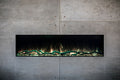
On a retrofit, a multi-unit development, or any project where the enclosure environment is unpredictable or the timeline is compressed, electric is the right call. Premium electric units still deliver the client-facing visual impact and modern linear aesthetic that luxury remodels require. The installation is clean, the outcome is predictable, and post-install service calls are rare.
The decision is not about which technology is better in the abstract. It is about which technology performs correctly given the specific project conditions. An interior designer working on a high-end project noted exactly this kind of outcome: "We had a great experience with Electric Fireplaces Depot. Their team prioritized customer service and offered helpful guidance in selecting the right fireplace for our client. The final result turned out beautifully."
That guidance — specifying the right fireplace for the project rather than defaulting to one technology — is what prevents visible compromise in spaces where it cannot be afforded.
Electric Fireplaces Depot carries both the water vapor fireplace collection and electric fireplace collection, so the specification conversation starts from what the project actually needs, not from what a single-category supplier can offer.
Checklist
- Identify the viewing distance and context first. A focal point viewed from 3–5 feet benefits most from water vapor's three-dimensional flame realism; an architectural feature viewed from across a room performs well with premium electric.
- Confirm the enclosure environment before specifying water vapor. Assess HVAC register placement, ceiling fan proximity, and whether the enclosure can be sealed properly during framing — cross drafts and dust exposure are the leading causes of water vapor performance issues.
- Ask what stage of construction the project is in. Water vapor specifications are most successful when planned from the framing stage; electric units can be specified and installed at nearly any construction phase.
- For luxury custom builders specifying across multiple units or phases, electric fireplaces reduce post-install service calls and scale predictably without enclosure-specific variables.
- Request installation guidelines before the enclosure is framed. Both technologies have dimensional and clearance requirements that are far easier to accommodate before drywall than after.
- Confirm the intended use — visual feature or supplemental heat. Both technologies provide flame visual without combustion; only some electric units provide meaningful supplemental heat output per manufacturer specs.
FAQ
What is the most realistic flame effect available in a fireplace without combustion? Water vapor fireplaces deliver the most realistic flame effect available without combustion. They use ultrasonic mist and LED lighting to produce a three-dimensional flame that moves unpredictably and can be touched safely. The effect is not a digital simulation — it is real water vapor behaving like fire, which is what separates water vapor from electric and other flameless technologies.
Do water vapor fireplaces require special installation compared to electric? Yes. Water vapor fireplaces require a sealed enclosure, controlled airflow, and either a direct water line or a reservoir. Cross drafts from HVAC registers or ceiling fans, poor enclosure sealing, and dust exposure are the most common installation mistakes — all of which degrade flame performance. Electric fireplaces require only a standard electrical rough-in and integrate into most wall assemblies without venting or additional mechanical preparation.
Can you use a water vapor fireplace in a retrofit or existing wall? Yes, but it requires more planning than a new construction installation. The enclosure must be sealed and airflow must be controlled, which is easier to achieve when planned from the framing stage. On a retrofit, a thorough assessment of the existing enclosure, HVAC proximity, and available water supply is necessary before specifying a water vapor unit. Electric fireplaces are generally the simpler specification for retrofit applications.
Are electric fireplaces realistic enough for luxury custom homes? Modern premium electric fireplaces are realistic enough for most luxury applications. High-end units use multi-layer LED arrays, mirrored fireboxes, and detailed log or ember beds that produce a flame visual that reads as premium, particularly when viewed from across a room. For close-proximity viewing in a primary living space focal point, water vapor delivers a higher level of realism — but electric is a credible specification for luxury projects where installation predictability is a priority.
What causes water vapor fireplaces to underperform after installation? The three most common causes are cross drafts, poor enclosure sealing, and dust or debris exposure. Any of these conditions reduces mist density, making the flame effect look thin or inconsistent. These issues are preventable with proper enclosure preparation and placement planning — which is why installation guidance before framing is more valuable than troubleshooting after the finish work is complete.
Do either of these technologies require venting or a gas line? Neither water vapor nor electric fireplaces require venting or a gas line. Both produce real flame visual without combustion, which eliminates the mechanical complexity, code requirements, and framing complications associated with gas or wood-burning units. This makes both technologies well-suited for multi-family applications, high-rise projects, and any build where clean installation environment and code compliance are priorities.
How do I decide between water vapor and electric for a specific project? The deciding factors are enclosure control, construction stage, and viewing context. Water vapor is the right specification when the project is new construction, the enclosure can be properly sealed and isolated from cross drafts, and the fireplace will be a close-proximity focal point. Electric is the right specification when the project is a retrofit, requires predictable scheduling, or involves multiple units where installation consistency matters more than maximum flame realism.
If you are specifying a fireplace for a luxury project and need to land on the right technology before framing is done, the time to ask those questions is now — not after the enclosure is closed. The Electric Fireplaces Depot team works through these decisions daily and can recommend the correct unit and installation approach based on your specific project conditions. Call or text 800-309-2144 or email pro@electricfireplacesdepot.com to get the specification right the first time.