1-800-309-2144

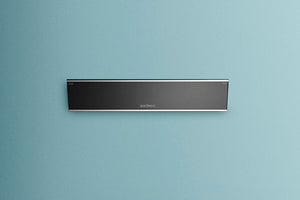
Electric fireplaces are code-compliant for multifamily buildings and do not require venting, gas lines, or combustion-related clearances. That makes them one of the most straightforward fireplace options available for developers and builders working across multiple units. Because they produce no combustion byproducts, they sidestep the ventilation requirements that typically complicate gas fireplace installations in attached or stacked residential construction.
For developers specifying across dozens of units, that distinction is not a minor convenience — it is the difference between a fireplace that scales cleanly and one that introduces compliance variability on every floor.
Why Do Electric Fireplaces Pass Code in Multifamily Construction?
Electric fireplaces meet code in multifamily buildings primarily because they are classified as electrical appliances, not combustion appliances. They produce no carbon monoxide, no open flame, and no exhaust gases — which means the sections of the International Building Code (IBC) and International Residential Code (IRC) that govern venting, combustion air, and clearance-to-combustibles for gas and wood-burning units simply do not apply.
What applies is standard electrical code — specifically, the National Electrical Code (NEC) requirements for dedicated circuits, outlet placement, and load capacity. Most built-in electric fireplaces are hardwired or plug-in units operating on 120V or 240V circuits. A licensed electrician handles the connection, and the inspection is straightforward because the scope is limited to the electrical rough-in, not a gas or venting system.
For multifamily construction specifically, this matters because:
- No penetrations through fire-rated assemblies for vent pipes or gas lines
- No combustion air calculations required for each unit
- No gas pressure testing per unit before occupancy
- No CO detector placement driven by the fireplace itself (though local codes may still require CO detectors building-wide)
The result is a cleaner inspection process that does not vary unpredictably from unit to unit.
What Types of Electric Fireplaces Are Approved for Multifamily Use?
Not every electric fireplace is the same, and understanding the categories helps developers specify the right product for the right application.
| Type | Flame Technology | Venting Required | Typical Use in Multifamily |
|---|---|---|---|
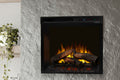
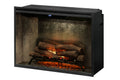
| Standard Electric | LED/Optic | No | Entry-level amenity units |
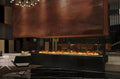
| Premium Linear Electric | LED/Optic | No | Feature walls, living areas |
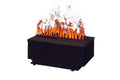
| Water Vapor Fireplace | Ultrasonic mist + LED | No | Luxury units, lobby features |
The most realistic flame effect available without combustion comes from water vapor technology, which uses ultrasonic mist and LED lighting to produce a three-dimensional flame that is visually indistinguishable from a real fire. These units are also code-compliant for multifamily applications — they require no venting, no gas line, and no combustion clearances. They do require proper enclosure preparation and controlled airflow to perform correctly, which is a specification detail, not a code barrier.
For standard and premium linear electric units, the installation environment is simpler: a properly framed enclosure, the correct electrical circuit, and manufacturer clearance requirements are the primary considerations.
All categories are safe for multifamily applications and have been installed across thousands of projects in attached residential construction.
What Does a Code-Compliant Electric Fireplace Installation Actually Require?
The installation requirements for electric fireplaces in multifamily buildings are predictable and repeatable — which is exactly what you need when you are scaling across 20, 50, or 100 units.
Electrical Requirements
Most premium built-in electric fireplaces require a dedicated 240V/20A circuit. This is specified at the electrical rough-in stage and should be confirmed against the manufacturer's installation documentation before framing is closed. Plug-in units on 120V circuits exist, but for built-in applications in multifamily construction, hardwired 240V is the standard.
Enclosure and Clearance Requirements
Manufacturers publish minimum clearance requirements for combustible materials — typically for the sides, top, and hearth area. These are conservative by design and easy to meet with standard framing. Because there is no combustion, the clearances are significantly less restrictive than gas fireplace requirements.
No Venting, No Gas, No Framing Complications
There are no vent penetrations to coordinate with the building envelope, no gas stub-outs to run per unit, and no combustion air openings to frame. This reduces install complexity and shortens install time across the entire project. When you multiply that simplicity across every unit in a building, the labor and coordination savings are substantial.
Inspections
Inspections cover the electrical connection and the installation clearances. Because there is no combustion system, there is no gas pressure test, no flue inspection, and no combustion air verification. Inspectors familiar with electric fireplace installations move through them efficiently.
The product is only part of the equation. The install environment — enclosure prep, electrical rough-in, and clearance compliance — is the other part. Developers who specify correctly at the front end avoid the callbacks that multiply across a large project.
How Does Scaling Electric Fireplaces Across Multiple Units Affect Compliance Risk?
Compliance risk in multifamily construction compounds. One non-compliant gas fireplace installation affects one unit. But if a specification error is baked into the project template, it can affect every unit on every floor. Electric fireplaces reduce that risk because the compliance requirements are consistent, narrow in scope, and tied entirely to the electrical system — which is already being inspected building-wide.
There are no fuel-source variables, no venting configuration differences between units, and no combustion-related inspections that could fail differently on different floors. Every unit gets the same product, the same electrical spec, and the same inspection scope. That consistency protects investor confidence and keeps the project on schedule.
From a post-occupancy standpoint, electric fireplaces also minimize service callbacks. There are no gas valves, no pilot lights, no venting blockages, and no combustion components to service. Maintenance requirements are minimal, and when an issue does arise, it is typically limited to the unit itself — not a building system.
Developers who have worked with Electric Fireplaces Depot on multifamily projects consistently note that the ordering and coordination process is straightforward. As one construction industry client put it: "Order and delivery was easy to coordinate." At scale, that reliability matters as much as the product specification itself.
Summary: Electric Fireplaces Are Built for Multifamily Compliance
Electric fireplaces are code-compliant for multifamily buildings, require no venting or gas lines, and scale predictably across any number of units. The compliance scope is limited to standard electrical requirements, which simplifies inspections, reduces coordination overhead, and eliminates the combustion-related variables that create risk in attached residential construction.
For developers and builders specifying at scale, the combination of code compliance, installation simplicity, and minimal post-occupancy maintenance makes electric fireplaces the most reliable fireplace solution for multifamily applications.
Checklist
- Confirm the manufacturer's electrical specification (voltage, amperage, circuit type) before electrical rough-in is closed on any unit
- Verify enclosure framing dimensions and clearance-to-combustibles requirements against the specific model being specified — not a generic standard
- Coordinate with the electrical contractor to ensure dedicated circuits are included in the multifamily electrical plan from the start
- For luxury or amenity units, evaluate water vapor fireplace options early — they require specific enclosure preparation that is easier to address during framing than after drywall
- Request manufacturer installation documentation for every model being specified across the project — do not rely on a single spec sheet for different unit types
- If you are a trade professional specifying electric fireplaces for a multifamily project, confirm that your supplier can support volume orders, consistent lead times, and direct warranty service
FAQ
Do electric fireplaces require any kind of venting in multifamily buildings? No. Electric fireplaces produce no combustion byproducts, so they do not require venting of any kind. There are no flue penetrations, no exhaust pipes, and no combustion air requirements — which means no penetrations through fire-rated wall or floor assemblies. This is one of the primary reasons electric fireplaces are well-suited for attached and stacked residential construction.
What electrical circuit does a built-in electric fireplace need in a multifamily unit? Most premium built-in electric fireplaces require a dedicated 240V/20A circuit. This needs to be specified at the electrical rough-in stage and confirmed against the manufacturer's installation documentation for the specific model being installed. Plug-in 120V units exist but are less common in built-in multifamily applications.
Are water vapor fireplaces also code-compliant for multifamily buildings? Yes. Water vapor fireplaces use ultrasonic mist and LED lighting to create a realistic flame effect — no combustion, no gas, no venting required. They are code-compliant for multifamily applications under the same electrical appliance classification as standard electric fireplaces. They do require proper enclosure preparation and controlled airflow to perform correctly, which should be addressed during the framing and specification stage.
What happens during an inspection for an electric fireplace in a multifamily building? The inspection covers the electrical connection and installation clearances. Because there is no combustion system, there is no gas pressure test, no flue inspection, and no combustion air verification. Inspectors review the electrical rough-in and the manufacturer's clearance requirements — a much narrower scope than a gas fireplace inspection.
Can the same electric fireplace model be specified across all units in a multifamily project? Yes, and this is one of the key advantages for developers. Using a consistent model across all units means a single electrical specification, a single set of clearance requirements, and a predictable inspection process on every floor. It also simplifies post-occupancy maintenance and eliminates unit-to-unit variability in compliance documentation.
What are the most common installation mistakes on multifamily electric fireplace projects? The most common issues come from enclosure prep and electrical coordination — specifically, enclosures that are framed too small for the specified unit, incorrect circuit sizing, and clearance requirements that were not confirmed before drywall. Addressing these at the specification and rough-in stage, before any unit is closed in, prevents callbacks that multiply across an entire building.
Do electric fireplaces need to be listed or certified to be installed in multifamily buildings? Yes. Electric fireplaces installed in multifamily buildings should carry a recognized listing — typically UL or ETL — which confirms they have been tested to applicable safety standards. This listing is required for permit and inspection approval in most jurisdictions. When specifying, confirm the listing is included in the product documentation before finalizing the order.
If you are working on a multifamily project and want to confirm the right specification before framing closes, the team at Electric Fireplaces Depot can work through the details with you — unit selection, electrical spec, enclosure requirements, and volume coordination. Reach out by call or text at 800-309-2144 or by email at pro@electricfireplacesdepot.com.