1-800-309-2144

Yes, you can convert most gas fireplaces to electric, and for many homeowners it is one of the more straightforward upgrades in a renovation. The core requirement is a suitable opening with access to a standard electrical outlet — no venting, no gas line, and no combustion involved. Whether your specific setup qualifies comes down to a few measurable conditions, and this guide walks through exactly what to check.
What Actually Makes a Gas Fireplace Opening Suitable for Electric Conversion?
The opening itself is usually the easiest part. Electric fireplaces are designed for retrofit applications, which means they are built to drop into existing enclosures without requiring structural changes in most cases.
What determines compatibility:
Opening dimensions. The width, height, and depth of your existing firebox need to match the unit you select. Most electric inserts are sized to fit standard prefab and masonry openings, but you should measure all three dimensions before choosing a product. Depth is the one most people overlook — some openings are shallower than expected, especially in older prefab units.
Electrical access. Electric fireplaces require a standard 120V outlet within reach of the unit, or a dedicated circuit for higher-output models. This is the one condition that occasionally requires a licensed electrician to address, but it is not a structural fireplace issue — it is a standard home electrical task.
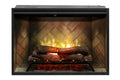
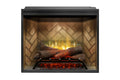
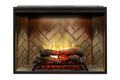
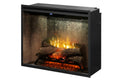
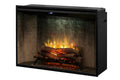
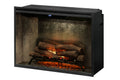
Condition of the existing firebox. A condemned or deteriorating firebox does not disqualify you from converting — it is often exactly why people convert. One customer described their 38-year-old metal prefab unit as "condemned" by a chimney inspector due to visible rust and a perforation. Their solution was a Dimplex Revillusion insert that dropped directly into the existing firebox. As they put it: "The fireplace looks the same and we didn't have to spend thousands to replace the existing firebox with a new wood burning unit or high tech electric alternative."
Gas line decommissioning. If you are removing gas logs or a gas insert, the gas line will need to be capped by a licensed professional. Once that is done, conversion to electric eliminates the need for existing gas infrastructure entirely.
What Are the Differences Between Converting Gas Logs vs. a Full Gas Insert?
These are two different starting points, and they affect which electric product makes sense.
| Starting Point | What You Have | Best Electric Replacement |
|---|---|---|
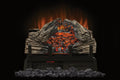
| Gas logs in a masonry fireplace | Open firebox, existing hearth | Electric log set or insert |
| Gas insert in prefab unit | Enclosed metal firebox | Electric insert sized to opening |
| Vented gas fireplace | Full surround, existing mantel | Built-in electric insert or linear unit |
| Vent-free gas logs | Open firebox, no chimney required | Electric log set |
The key takeaway: gas log replacements are typically the simplest conversion because the firebox is already open and accessible. Gas insert replacements require more precise measurement of the insert cavity.
What Are the Most Common Mistakes People Make During This Conversion?
Most conversion problems do not come from the product — they come from enclosure prep and mismatched sizing. Here is what we see repeatedly:
Measuring the opening instead of the firebox. The visible opening of your fireplace is not the same as the interior firebox dimensions. Measure the interior cavity — width at the back, width at the front, depth from front to back, and height. These numbers determine which insert actually fits.
Assuming any outlet will work. Some higher-output electric fireplaces require a dedicated circuit. If you are planning to use the heater function regularly, confirm the outlet situation before ordering.
Not accounting for the surround or trim. Electric inserts come with trim kits that cover the gap between the unit and the opening. If your opening is significantly larger than the unit, you need a trim kit that matches — or you will have visible gaps.
Skipping the gas line cap. This is not optional. Even if the gas has been off for years, the line needs to be professionally capped before you close up the opening.
Choosing based on flame appearance alone. The flame effect matters, but so does the depth of the firebox relative to the unit. A shallow firebox with a deep insert creates a poor visual result. Match the unit to the actual space.
Is Converting a Gas Fireplace to Electric Worth It?
For most homeowners, yes — and the reasons go beyond aesthetics.
Electric fireplaces require no venting, no gas line, and no combustion. That means no annual inspections for the fireplace itself, no pilot light maintenance, and no concern about carbon monoxide. The installation is clean, and the operating cost is predictable.
The realistic flame technology available today is also significantly better than what most people expect. One customer noted: "It looks more realistic than one of the units that tries to imitate gas flames." Another described the experience after installation: "Very beautiful. Looks like real fire, especially with the orange/yellow blended colors."
For homeowners who want the visual impact of a fireplace without the ongoing maintenance and safety concerns of combustion, electric conversion is a practical, permanent solution.
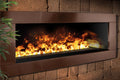
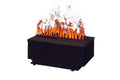
If you are considering a Water Vapor Fireplace for the most realistic flame effect available without combustion, those units deliver an exceptional visual result but require careful enclosure preparation and controlled airflow — a different evaluation process than a standard electric insert. That is a conversation worth having before you commit to a unit.
How Do You Evaluate Your Specific Setup Without Becoming an Expert?
You do not need to become an expert. You need three things: your firebox measurements, a photo of the existing opening, and an honest answer to whether you are replacing gas logs or a full gas insert.
With those three inputs, a qualified advisor can tell you which units fit, which ones require a trim kit, and whether your electrical situation needs attention. The goal is to give you a specific recommendation based on your setup — not a list of options to sort through yourself.
That is exactly what the Electric Fireplaces Depot product category and conversion guidance is built to do: match your existing opening to the right unit, flag anything that needs attention before you order, and make sure you are not running into the common issues we see in the field after the fact.
Checklist
- Measure your firebox interior: width at front, width at back, height, and depth — all four numbers before you shop for any electric insert.
- Confirm electrical access: locate the nearest outlet and determine whether it is a dedicated circuit or shared, especially if you plan to use the heater function.
- Identify your starting point: are you replacing gas logs in an open firebox, or removing a full gas insert from an enclosed cavity? This determines which product category fits.
- Have the gas line professionally capped before installation — this is a required step regardless of how long the gas has been off.
- Take a photo of your existing opening and note the surround dimensions — this helps determine whether a trim kit is needed to cover gaps.
- Contact Electric Fireplaces Depot with your measurements and photos before ordering; a qualified advisor can confirm fit and flag any issues specific to your setup.
FAQ
Can I just put an electric insert into my existing gas fireplace opening? In most cases, yes. Electric inserts are designed for retrofit applications and are sized to fit standard prefab and masonry openings. You need to measure the interior firebox dimensions — width, height, and depth — and match them to the unit specifications. Access to a standard 120V outlet is also required.
Do I need to remove the gas line before converting to electric? You do not need to remove it, but it must be professionally capped. A licensed plumber or gas technician can cap the line, which takes the gas out of service permanently. Once capped, the electric unit operates completely independently of any existing gas infrastructure.
Will an electric fireplace look as realistic as gas logs? Modern electric fireplaces have closed the gap significantly. Units like the Dimplex Revillusion use patented technology to produce a flame effect that many homeowners find more convincing than traditional gas log imitations. The key is choosing a unit with the right depth and flame projection for your specific firebox — a poor fit visually undermines even a high-quality unit.
What if my existing firebox is in bad condition or was condemned? A condemned or deteriorating firebox is actually one of the most common reasons homeowners convert to electric. Because electric inserts require no combustion and no venting through the firebox, the condition of the firebox walls is less critical than it would be for wood or gas. The insert sits inside the opening and operates independently.
Do electric fireplaces require any venting or chimney work? No. Electric fireplaces require no venting, no chimney, and no flue. The conversion eliminates the need for any of the existing gas or combustion infrastructure. This is one of the primary reasons electric conversion is simpler and less disruptive than replacing a gas unit with another combustion appliance.
How do I know which electric insert size will fit my opening? Measure the interior firebox — not the decorative surround opening. You need width at the front, width at the back (some fireboxes taper), height, and depth. Compare those numbers to the unit's listed dimensions. Most manufacturers provide minimum opening requirements. If you are unsure, send your measurements to a product advisor before ordering.
Is the installation something a homeowner can do themselves? For most electric insert conversions, yes — once the gas line is capped by a professional. Customers have described the installation as straightforward and easy, requiring only basic carpentry experience in some cases minimal framing. The complexity depends on whether any electrical work is needed, but the fireplace installation itself is typically manageable for a homeowner.
If you are ready to evaluate your specific opening, the team at Electric Fireplaces Depot can walk through your setup with you directly. Bring your firebox measurements and a photo of the existing opening, and we will tell you exactly what fits and what to watch for. Call or text 800-309-2144, or reach us at sales@electricfireplacesdepot.com.